Influencer marketing in Indonesia: a 2026 brand guide
How influencer marketing works in Indonesia: platforms, pricing, and campaign strategy

Indonesia is not a market where Western influencer playbooks transfer cleanly. It is the fourth most populous country in the world, home to over 1.1 million Instagram influencers, and the most performance-oriented influencer market in all of Asia-Pacific. For brands used to awareness-first campaigns with glossy production, Indonesia requires a fundamentally different posture.
This guide covers what the data actually says about Indonesia's influencer landscape in 2026: which platforms dominate, which content styles convert, what creators charge, and how to structure campaigns that produce results rather than reach.
Table of contents
Jump to each section:
- Why Indonesia leads APAC in performance-driven influencer marketing
- Platform mix: TikTok, Instagram, and live commerce in Indonesia
- Content style: what works with Indonesian audiences
- Creator tiers and pricing benchmarks in Indonesia
- Top categories and niches for influencer campaigns
- How to build an effective influencer campaign in Indonesia
Why Indonesia leads APAC in performance-driven influencer marketing
Indonesia is the most advanced market in Asia-Pacific for outcome-focused influencer campaigns. According to AnyMind Group's State of Influence in APAC 2026 report, 74% of influencer campaigns in Indonesia are now designed with measurable performance outcomes in mind, higher than any other market across the ten covered in the research.
That figure reflects a structural shift that has been building for several years. Across APAC as a whole, outcome-driven campaigns grew from 28.24% of total tracked influencer activity in 2023 to 42.47% in 2025. Indonesia is running well ahead of the regional average, which means brands entering the market expecting it to behave as an awareness channel are already behind where local advertisers have landed.
The performance orientation extends to compensation models. As brands have adopted Cost Per Result (CPR) frameworks, creators have adapted their content to optimize for measurable actions: link clicks, add-to-cart behavior, TikTok Shop purchases, and affiliate conversions. A campaign that cannot be tracked is increasingly a campaign Indonesian marketers will not run.
This also raises the stakes around creator vetting. Budget wasted on inflated follower counts is budget that cannot drive the conversions campaigns are now measured against. Rigorous verification before activation is standard practice for experienced buyers in this market.
 Ariana Sorensen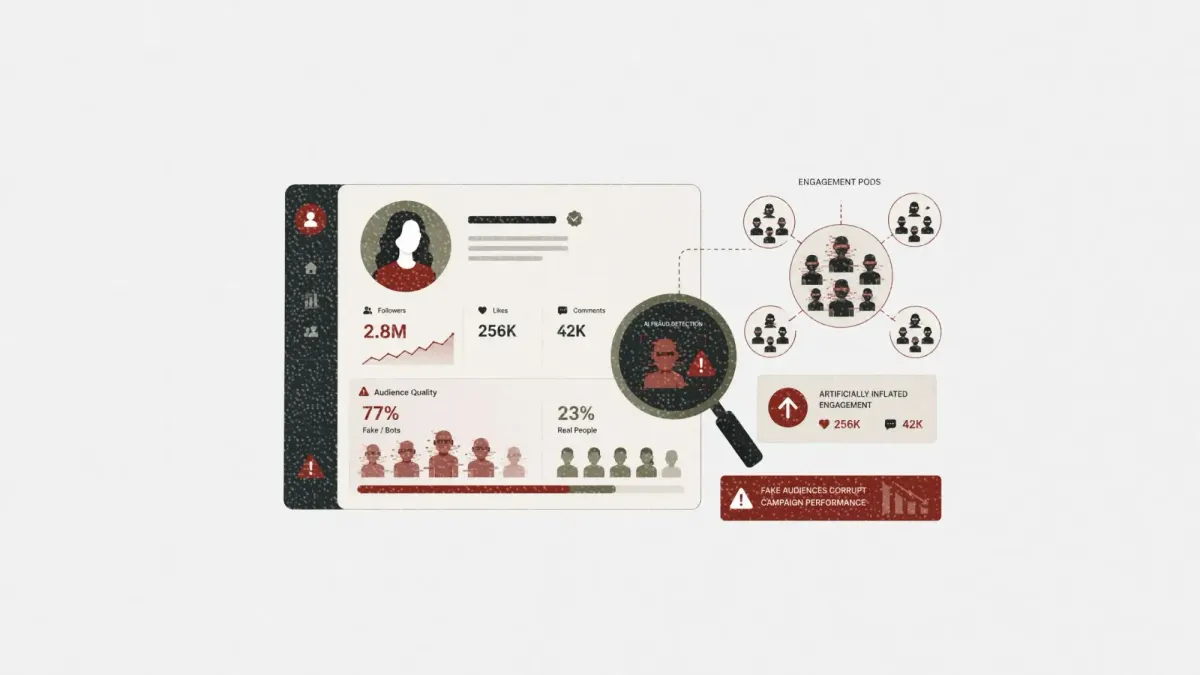
Platform mix: TikTok, Instagram, and live commerce in Indonesia
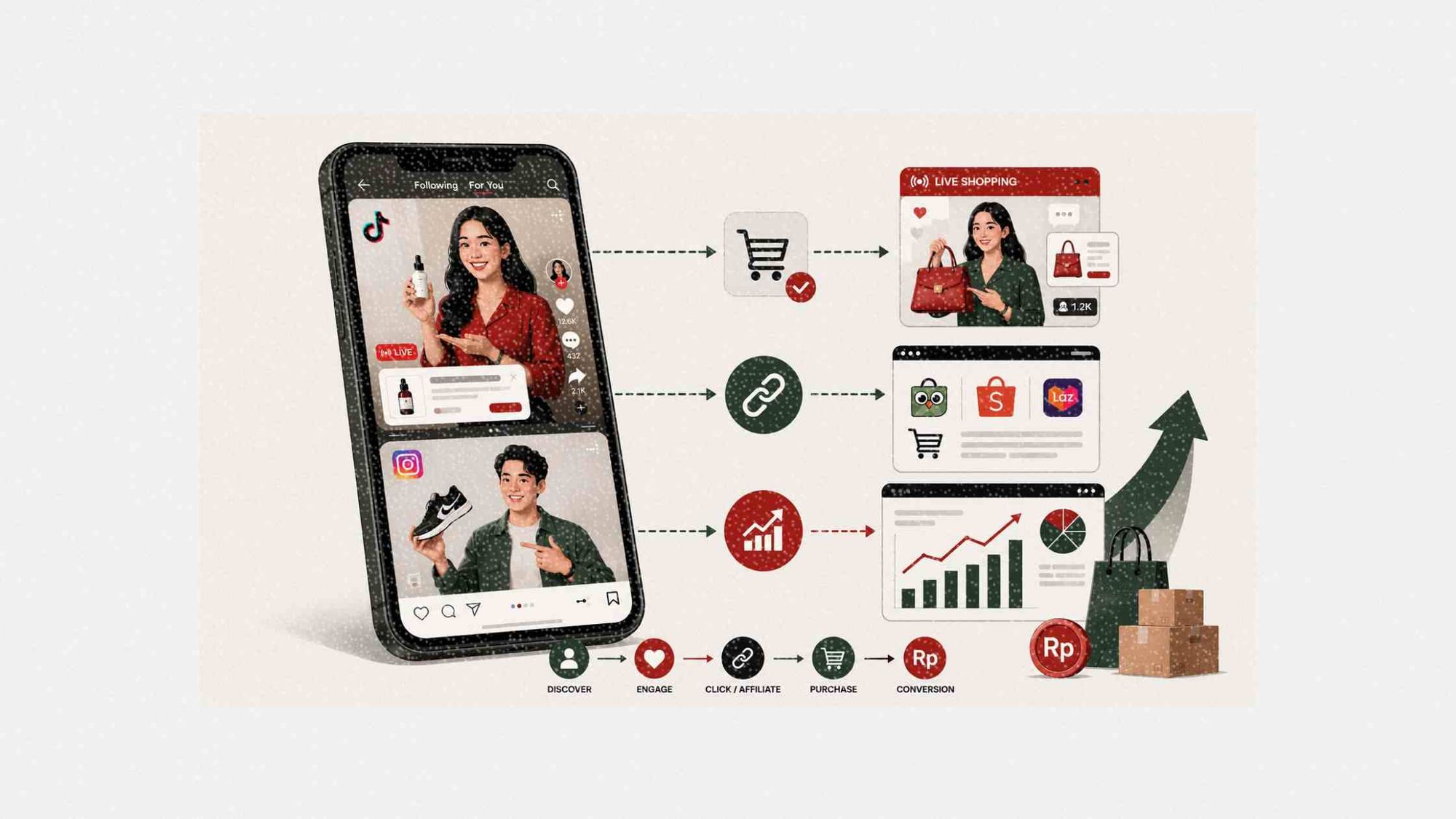
Indonesia does not operate as a single-platform market. TikTok and Instagram both carry significant weight, and the role each plays in the purchase journey is distinct enough that treating them as interchangeable is a reliable way to underperform on both.
TikTok is the discovery engine. According to AnyMind Group's analysis of Southeast Asia influencer trends, influencer campaigns on TikTok across the region surged from 28.35% of total campaign activity in 2023 to 50.58% in 2025. In Indonesia, the platform has become the primary channel for product introduction, particularly in consumer goods, beauty, and fashion. With 180 million adult users as of late 2025 per DataReportal's Digital 2026: Indonesia report, TikTok reaches 88.9% of Indonesian adults who are online. Those are not casual browsing numbers: Indonesian TikTok users are transacting at scale.
TikTok Shop has embedded commerce directly into the creator experience. Live selling sessions, affiliate links in video content, and creator storefronts have collapsed the distance between a product recommendation and a completed purchase. Brands that separate their creator content strategy from their TikTok Shop strategy are leaving attribution and conversion data they paid to generate unused.
Instagram remains the platform of record for higher-consideration categories. Beauty brands with complex product education requirements, fashion labels targeting aspirational positioning, and brands reaching a more professional demographic still find Instagram the more reliable ROI driver. The critical difference is audience intent. TikTok users are in a discovery mindset. Instagram users are often at the consideration or validation stage of their purchase journey.
YouTube carries meaningful weight in Indonesia for longer-form content, particularly tech reviews, tutorials, and comparison videos. Indonesian consumers are research-oriented buyers who actively seek out detailed product information before committing. That makes YouTube an underutilized asset for brands with complex or premium offerings, even though it receives less attention in Indonesia-focused campaign planning than TikTok and Instagram.
Live commerce deserves its own category. Indonesia, alongside Thailand and Vietnam, has developed one of the most mature live-selling creator cultures in the region. For applicable categories (beauty, fashion, food), brands that integrate live-format creators into their campaign mix can generate same-session conversions that static posts cannot match.
Content style: what works with Indonesian audiences
The clearest signal from recent market data is that polished, studio-produced content consistently underperforms raw, scenario-based storytelling in Indonesia.
The Cube × impact.com eCommerce Influencer Marketing in Southeast Asia 2025 report points to why: consumer trust in mega influencers across Southeast Asia fell 7% year-on-year, with audiences increasingly skeptical of over-polished endorsements and shifting toward smaller creators whose content feels closer to a real recommendation.
In practice, a creator filming a skincare routine in their actual bathroom outperforms a creator filmed in a studio set. A food delivery unboxing in a home kitchen outperforms a styled food shoot. A tech review that shows setup friction alongside the solution outperforms a feature highlight reel. The higher the perceived production cost of the content, the more it reads as an advertisement rather than a recommendation.
Indonesian consumers are experienced online shoppers who have learned to filter out messaging that feels manufactured. The creator content that converts replicates the experience of getting a recommendation from someone in your own network, not an advertisement that happens to use a creator's face.
Comparison content performs particularly well in tech and electronics categories. Side-by-side product comparisons, "which should you buy" formats, and honest "I returned this because" content all see strong engagement because they match how Indonesian consumers research purchases before committing.
Dinda Anandita, Account Director at content-led PR agency Content Collision, notes that the production value signal in Indonesia has fundamentally flipped: "Indonesia is one of the few markets where a creator filming on their phone in natural light will routinely outperform a brand-produced video with a full crew. High polish has become a trust signal for ads, not for recommendations, and Indonesian audiences have become very good at telling the difference. Brands that insist on production guidelines end up paying for content that looks exactly like what audiences scroll past."
Creator tiers and pricing benchmarks in Indonesia
Indonesia has one of the deepest nano and micro creator ecosystems in Southeast Asia. Over 1.1 million influencers operate on Instagram alone, with approximately 980,000 of those in the nano tier (under 10,000 followers). That scale is a strategic asset for brands willing to run coordinated multi-creator campaigns rather than single large placements.
The engagement advantage at the nano tier is significant. Nano influencers in Indonesia generate engagement rates of approximately 7.2% on Instagram, compared to 1.1% for creators with over 100,000 followers. On TikTok, nano creators carry a median engagement rate of 8.1%, while costing orders of magnitude less per post than macro or mega accounts. For performance-oriented campaigns where cost-per-conversion is the measure, the nano and micro tier is the default starting point for most effective strategies in this market.
Typical influencer pricing in Indonesia by tier is as follows. Rates are approximate ranges in Indonesian Rupiah (IDR) and vary by niche, engagement performance, content format, usage rights, and exclusivity terms:
Performance-based arrangements, combining a reduced flat fee with affiliate commissions, are increasingly common in Indonesia and often produce better outcomes for both parties than flat-fee-only deals. The market has matured enough that experienced creators understand hybrid compensation and actively prefer it for categories where they are confident in the conversion potential of their audience.
 Ariana Sorensen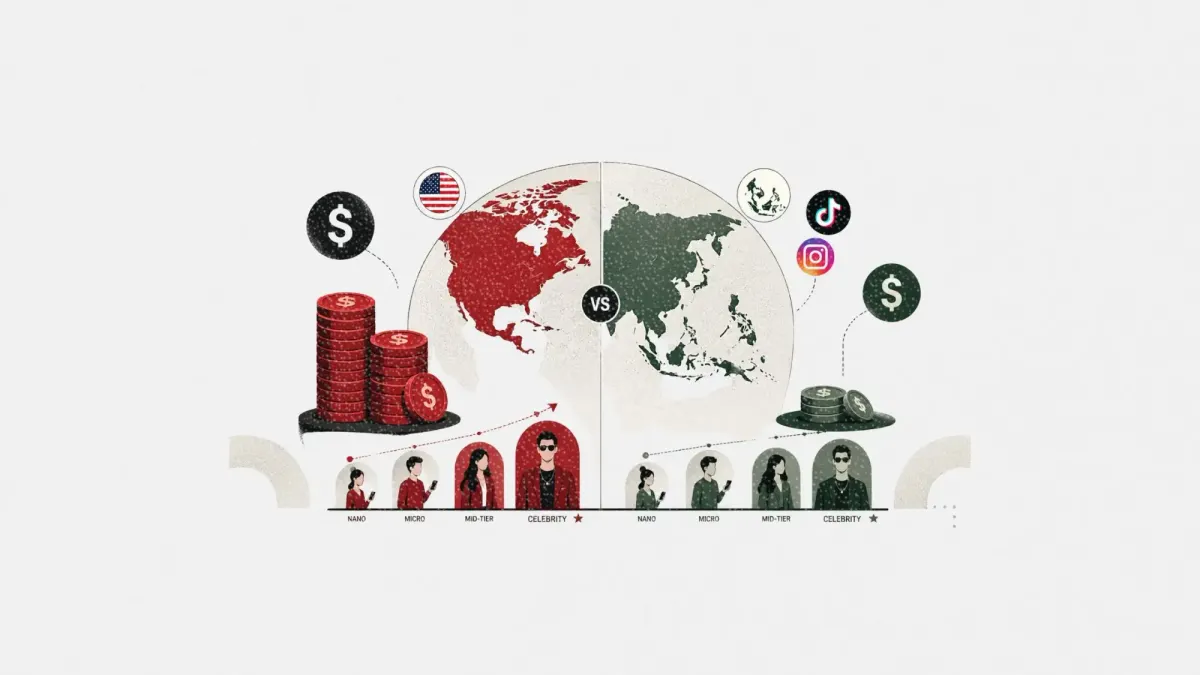
Usage rights require a separate negotiation. If a brand wants to run a creator's content as a paid ad through whitelisting or dark posting, that needs to be specified in the contract and priced as an additional right. Assuming organic content terms extend to paid amplification without an explicit clause covering it is one of the most common contracting mistakes brands make when entering the Indonesian market.
Top categories and niches for influencer campaigns
Indonesia's influencer marketing activity concentrates heavily in a few categories, though TikTok Shop has widened the commercial aperture considerably over the past two years.
Fashion and beauty consistently generate the highest volume of influencer campaigns in Indonesia. Within beauty, halal-certified and locally produced products represent a high-growth segment, driven by a large Muslim consumer base with specific formulation requirements. Brands entering this category need creators who can contextualize the product within Indonesian lifestyle norms rather than adapt a global campaign brief. The distinction matters: Indonesian beauty consumers are discerning and skeptical of imported products that have not been validated by local voices they trust.
Food and beverage is the second-largest category by campaign volume, with strong demand for recipe content, restaurant discovery, and packaged food reviews. The format that consistently performs is the daily routine integration, where products appear naturally within a creator's existing content rather than as a standalone brand post.
Tech and electronics performs differently in Indonesia than in most other Southeast Asian markets. Indonesian consumers are among the most research-intensive in the region before committing to a purchase, which means review content and comparison formats generate higher engagement than equivalent content in Thailand or Vietnam.
The conversion path in this category often runs across multiple platforms: TikTok for initial discovery, YouTube for deeper review, and a marketplace for final purchase. Creator strategies that span those touchpoints outperform single-platform placements.
Seasonal timing is a material variable that brands frequently underestimate. Ramadan and Eid al-Fitr are the market's peak commercial periods, generating record transaction volumes across Shopee, Tokopedia, and TikTok Shop.
Creator campaigns timed to Ramadan need to be planned and contracted three to four months in advance, as creator availability compresses sharply and rates increase as the period approaches. Brands that treat Indonesia as a market operating on a standard calendar rather than a religious and cultural one will consistently overbid for underperforming creator slots during these windows.
How to build an effective influencer campaign in Indonesia
The operational realities of running influencer campaigns in Indonesia differ from markets like Singapore or the United States in ways that directly affect outcomes.
Start with micro, not macro
The data consistently shows that micro and nano creators deliver better cost-per-conversion in Indonesia than large accounts. A coordinated cluster of 20 micro creators will typically outperform a single macro placement at comparable total budget, particularly for categories where personal recommendation and peer trust drive conversion. The exception is campaigns where raw reach is the primary objective, such as national brand launches or product announcements. For performance-oriented campaigns, smaller is almost always more efficient.
Brief for context, not control
The single biggest creative mistake brands make in Indonesia is over-briefing. Detailed scripts, mandatory staging requirements, and insistence on brand visual guidelines produce the exact content style that underperforms in this market. A strong brief communicates the campaign objective, the key product fact the brand wants the creator to convey, and the target audience. What it should not do is script the creator's words or set production requirements. The brief is a direction, not a storyboard.
Build for TikTok first
Even when Instagram is part of the platform mix, designing content for TikTok's short-form vertical format and adapting for Instagram Reels is more efficient than the reverse. The discovery mechanics of TikTok favor content optimized for that format, and Indonesia's TikTok audience scale means the upside of native TikTok content significantly outweighs the production efficiency of cross-posting from an Instagram-first asset.
Include attribution from day one
Indonesia's performance orientation means creators and local agencies expect trackable links, discount codes, or TikTok Shop affiliate structures to be part of campaign design from the start. Brands that launch campaigns without attribution mechanisms built in cannot optimize against the performance data this market produces. Attribution is not a reporting feature added after launch. It is a campaign design requirement.
Account for market-specific contracting norms
Indonesian creators invoice in IDR. Payment terms, currency handling, and any usage rights expansion all need to be addressed in the contract before content production begins. Brands that build relationships with local agencies or have Indonesia-experienced in-house teams handle contracting are far less likely to encounter the post-campaign disputes that result from relying on standard global contract templates in a market with different norms.
 Ariana Sorensen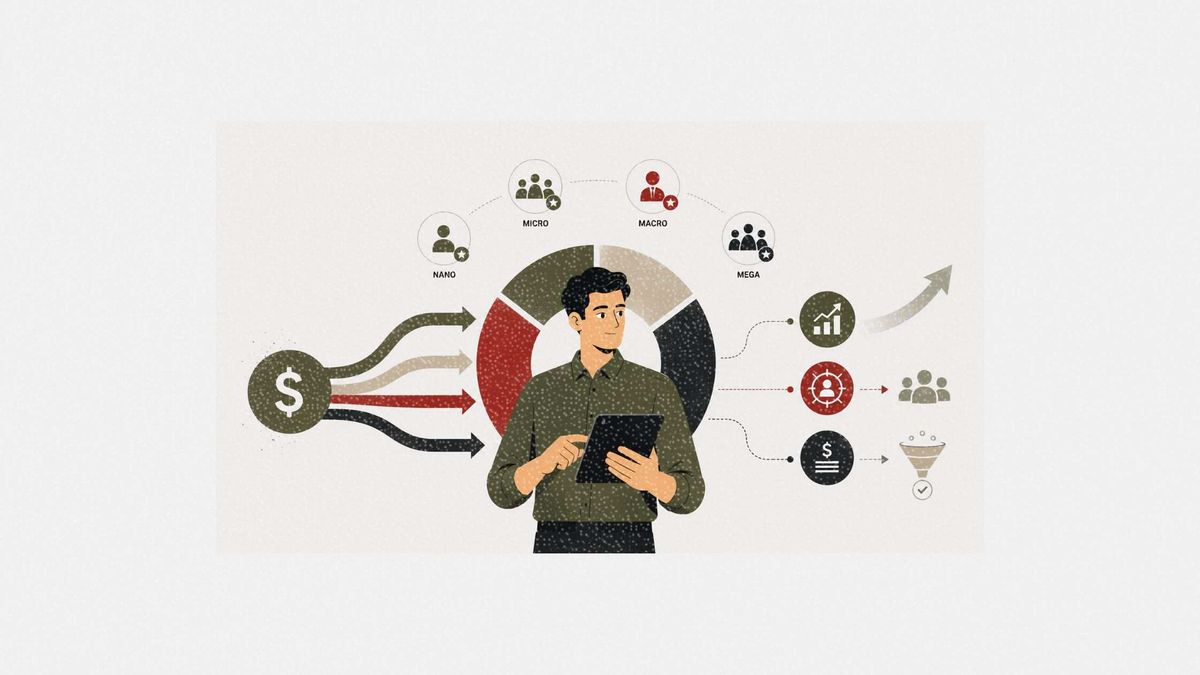
For brands building a broader APAC influencer presence, Indonesia and the Philippines share the most similar platform culture and creator tier dynamics in the region. Singapore operates differently: higher per-creator rates, a more premium positioning norm, and a different platform weight given Instagram's dominance there at 71% of campaign investment. Those structural differences matter when planning multi-market campaigns, and understanding them before allocating budget across markets will save more than it costs to learn.