
Why luxury resale is becoming live shopping’s strongest trust case
TikTok Shop says livestreams generate 94% of U.S. luxury-resale revenue. The reason is not just urgency. Live video lets buyers inspect condition and test seller expertise.


Luxury live shopping is usually sold as entertainment with a checkout button. TikTok Shop's latest U.S. luxury-resale numbers point to a more useful explanation: live video works because it lets buyers inspect expensive secondhand products before committing. In this category, the seller is not only creating demand. The seller is answering the questions that stand between interest and trust.
TikTok Shop says 94% of its U.S. luxury-resale revenue year to date comes from livestreams, while category GMV has risen 400% year over year. Those percentages are company-reported, and TikTok has not disclosed the starting date, absolute GMV, transaction count, or seller concentration behind them. Even with those limits, the pattern gives brand and creator teams a clear case study in how content can reduce purchase risk, not merely create urgency.
Table of contents
Jump to each section:
- What TikTok Shop’s luxury-resale numbers show
- Why live video fits high-consideration resale
- Trust comes from the system, not the host alone
- What a credible luxury livestream should show
- How brands should choose and measure live sellers
- What Southeast Asia adds to the U.S. case
- The real lesson is uncertainty reduction
What TikTok Shop’s luxury-resale numbers show
At TikTok Shop's inaugural Luxury Resale Summit in New York, the platform said livestreams generated 94% of U.S. luxury-resale revenue year to date. It also reported a 400% year-over-year increase in category GMV, driven largely by products such as handbags and watches, according to Digiday. The careful wording matters: this is revenue share, not proof that 94% of transactions happen live.
TikTok has not provided absolute sales, order volume, average order value, or a breakdown by seller. That makes the figures directional rather than a complete market benchmark. A small group of large sellers could account for a meaningful share of the increase, and the 400% growth rate could be amplified by a low starting base.
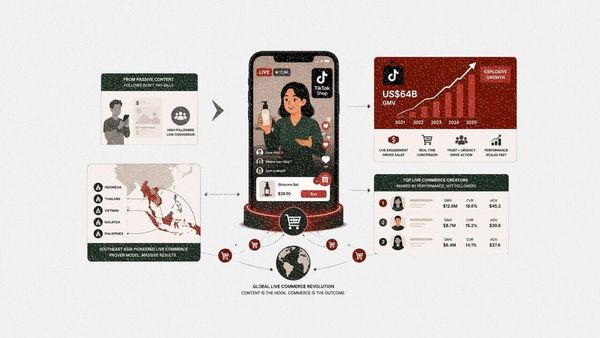
Still, the category mix is hard to dismiss. Across TikTok Shop in the U.S., live commerce accounted for only 14% of GMV in 2025, while short video accounted for 50%. Luxury resale appears to behave very differently because the buying problem is different: shoppers need more evidence before they spend.
Why live video fits high-consideration resale
A standard product page can list a bag's dimensions and condition grade, but it cannot respond when a buyer asks to see a corner again under better light. A livestream can rotate the item, zoom in on stitching, open every compartment, compare scale against the host's body, and answer follow-up questions in the same session. The format turns product inspection into content.
Rainee Walker, TikTok Shop's head of category for U.S. luxury resale, described the livestream as a conversation in which a subject-matter expert can explain condition and show how an item can be worn, according to Tubefilter. This is more important for resale than for a new, standardized product. Two bags with the same model name can differ significantly in wear, repairs, hardware, accessories, and provenance.
Livestreaming also exposes seller competence in real time. Viewers can see whether the host knows the difference between normal wear and a serious flaw, whether answers stay consistent, and whether difficult questions are handled directly. A charismatic host may attract viewers, but expertise is what helps a high-intent buyer cross the line.
Trust comes from the system, not the host alone
The live host cannot carry the entire trust burden, especially in a category exposed to counterfeits. TikTok Shop limits U.S. luxury-resale selling to invited merchants and requires them to work with one of five approved authentication partners: Entrupy, Legitmark, CheckCheck, Legit App, or Real Authentication. That gives buyers a formal verification layer before the seller begins demonstrating the item.
This distinction matters for marketers. Creator trust and platform trust are complementary, not interchangeable. The host makes the evidence understandable, while authentication rules, seller controls, returns information, and transaction protections make the promise enforceable.
Dinda Anandita, Account Director at content-led comms agency Content Collision
“For high-value resale, the strongest live seller is not simply the most entertaining person on camera. It is someone who can surface flaws without losing credibility, explain what authentication covers, and make the buyer feel informed rather than rushed. Brands should treat that ability as a core selection criterion.”
The implication is uncomfortable for teams that still choose live-commerce creators primarily by follower count or on-camera energy. The best host for a luxury-resale session may look closer to a knowledgeable salesperson, collector, or authenticator than a conventional lifestyle influencer.

What a credible luxury livestream should show
Good luxury-resale streams should be designed around buyer questions, not a generic run-of-show. The host needs enough time and camera control to make each item's condition legible. At minimum, the session should cover:
- Condition: corners, handles, seams, lining, hardware, scratches, stains, odors, repairs, and signs of use.
- Scale and function: dimensions, weight, capacity, closures, compartments, and how the product sits when worn.
- Identification: model, material, color, year or collection when known, serial or date-code context where appropriate, and included accessories.
- Authentication: which partner examined the item, what process applies, and what the buyer receives as evidence.
- Transaction terms: price, shipping, return rules, and what happens if the item differs from the description.
Production quality should support inspection rather than make the stream look expensive. A stable close-up camera, neutral lighting, reliable focus, and a moderator who can collect repeated questions are more valuable than a dramatic set. If glare hides the hardware or a beauty filter changes the product color, the content is working against the sale.
The sequence also matters. Sellers should establish the item identity and overall condition before creating urgency around price or scarcity. Repeating a countdown while unresolved questions sit in the chat may lift short-term pressure, but it weakens the exact trust advantage that live video can provide. A moderator should flag unanswered condition questions, record any correction made on air, and make sure the product listing reflects material facts revealed during the session.
The host should also say what cannot be confirmed. Provenance claims, manufacturing dates, and condition judgments have different levels of certainty. Clear boundaries strengthen credibility because buyers can distinguish verified information from informed opinion.
How brands should choose and measure live sellers
Luxury-resale operators need a different creator scorecard. Reach still matters, but it belongs beside signals that show whether a host can manage scrutiny and convert considered purchases. Teams should review past sessions, not only highlight reels, and look for how the seller handles hesitation, flaws, repeated questions, and items that do not sell immediately.
A practical selection scorecard can include:
- Relevant category knowledge and accuracy under live questioning.
- Average concurrent viewers and qualified chat participation.
- Product-level conversion rate and GMV per live hour.
- Refund, return, dispute, and cancellation rates.
- Average time from first product demonstration to purchase.
- Compliance with condition disclosure and authentication language.
- Repeat-buyer rate after the creator's sessions.
The last four measures help separate genuine trust from pressure-driven conversion. A host can produce a strong sales spike and still create expensive downstream problems if viewers later feel misled. Returns and disputes belong in creator-performance reporting because they reveal whether the content set accurate expectations.
Brands should also resist scripting every sentence. A useful brief defines the evidence that must be shown, the claims that require qualification, and the transaction details that cannot be omitted. It should leave the host room to answer naturally because the audience's questions are part of the value of the format.
What Southeast Asia adds to the U.S. case
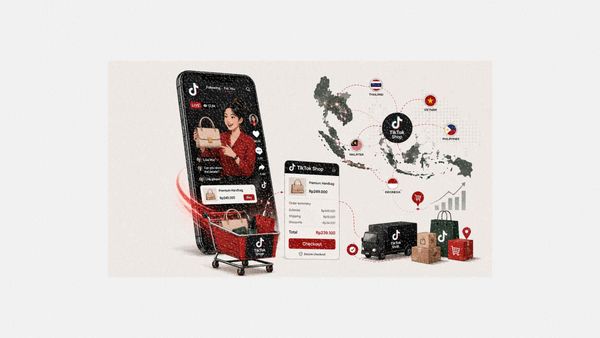
TikTok Shop's U.S. luxury-resale data is new, but live-first selling is not. Southeast Asian sellers have spent years building multi-hour sessions around demonstrations, objection handling, limited offers, and direct checkout. ContentGrip's earlier analysis found that TikTok Shop generated US$45.6 billion in Southeast Asian GMV in 2025, representing 71% of the platform's global total.
The U.S. case does not mean brands should copy a Southeast Asian playbook without adapting it. Luxury resale brings higher ticket values, more authentication risk, and a stronger need for detailed condition disclosure. What transfers is the operating discipline: commerce-native hosts, consistent live schedules, active moderation, fast answers, and measurement that goes beyond impressions.
Comparable category-level luxury-resale data for Southeast Asian TikTok Shop markets has not been publicly disclosed in the sources reviewed. That missing comparison matters. The region may be more mature in live commerce overall, but marketers should not assume the same 94% revenue share applies to luxury resale without local evidence.
The real lesson is uncertainty reduction
TikTok Shop's numbers are not a universal argument that every luxury brand needs to go live. They show that livestreaming becomes especially valuable when the buyer has specific questions that static content cannot settle. The greater the variation between individual products, the more useful real-time inspection becomes.
That makes luxury resale a strong model for other high-consideration categories, including collectibles, refurbished electronics, vintage furniture, and specialized equipment. In each case, the host earns the sale by making condition, function, and risk easier to evaluate. Entertainment can keep viewers watching, but evidence is what makes the format commercially credible.
For brand teams, the actionable shift is simple: stop briefing livestreams as longer versions of short-form ads. Build them as guided inspections, choose hosts for expertise as well as presence, and measure what happens after checkout. When live video reduces uncertainty honestly, trust is not a soft brand outcome. It is part of the conversion mechanism.