
OpenAI pitches ChatGPT ads to brands as it makes Cannes Lions debut
OpenAI is positioning ChatGPT ads as mid-funnel inventory, citing early adoption signals, falling dismiss rates, and new measurement partnerships like

OpenAI is using Cannes Lions to position ChatGPT ads as a new way for brands to reach consumers when they are researching and comparing options, not just browsing or searching. The company is framing this as a shift from an “attention economy” toward an “intelligence economy” where conversations carry more context than keywords.
ChatGPT ads entered testing in February and are being presented as a mid-funnel format that appears below the chatbot’s organic answers in a sponsored box. OpenAI’s ads leadership has emphasized separation between sponsored and organic responses, and limits around how conversation data is used for targeting and measurement.
Table of contents
Jump to each section:
- How OpenAI is framing ChatGPT ads at Cannes Lions
- What ChatGPT ads look like and where they sit in the funnel
- Early signals OpenAI is highlighting
- Partnerships and measurement: why LiveRamp matters here
- What marketers should know about ChatGPT ads right now
How OpenAI is framing ChatGPT ads at Cannes Lions
OpenAI is using its first official appearance at Cannes Lions to sell a specific narrative: people come to ChatGPT with “a job to be done,” which creates an environment where ads can be matched to explicit intent and richer context than traditional keyword-based buying.
The company is also leaning into the idea that conversational queries can reveal more than immediate purchase intent. OpenAI’s ads team has suggested that even when a user is not explicitly shopping, the direction of a conversation can signal emerging needs that advertisers may want to reach, though it also acknowledges those upper-funnel moments are harder to measure.
 ContentGrip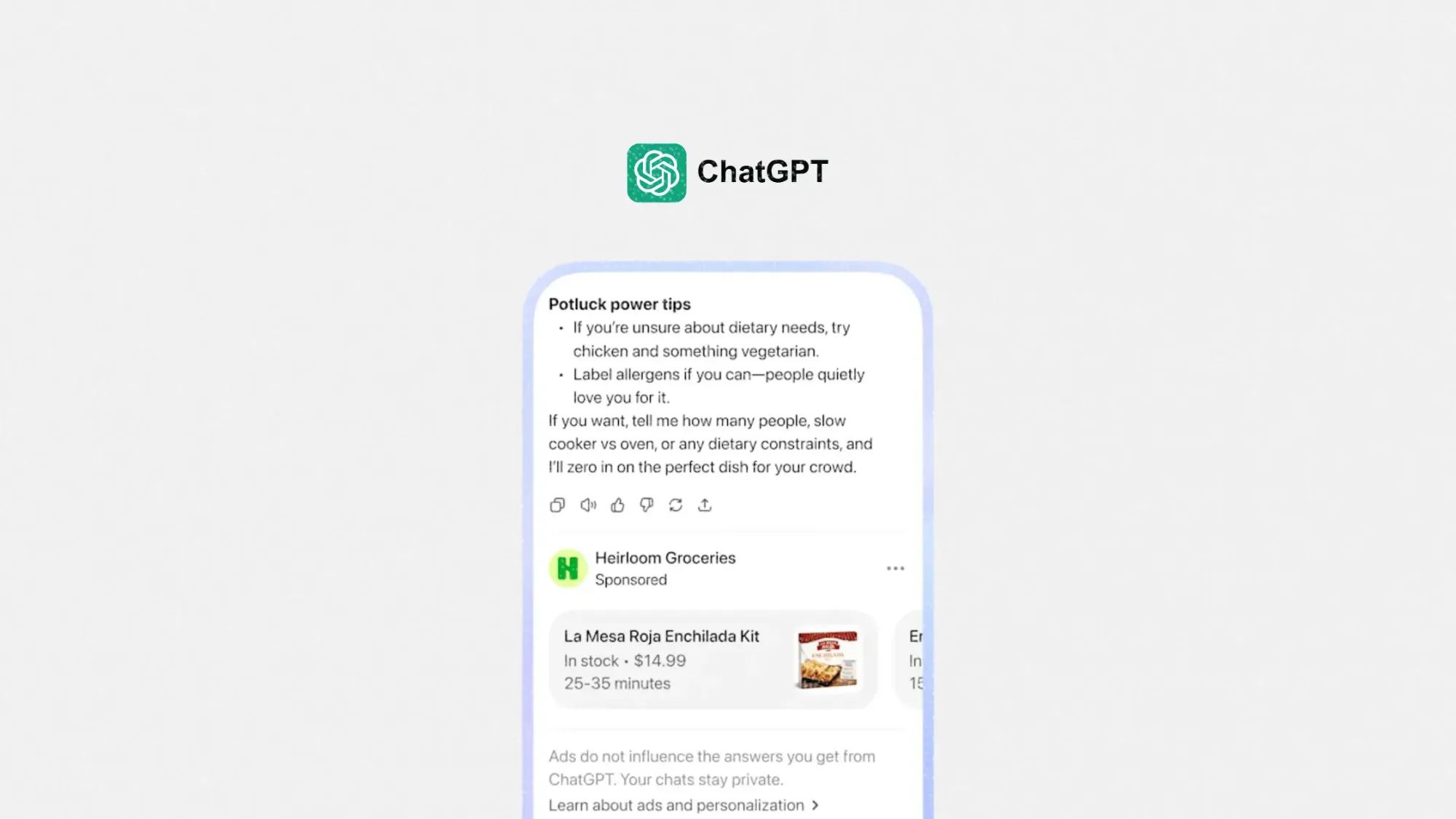
What ChatGPT ads look like and where they sit in the funnel
ChatGPT ads are being positioned as decision-layer inventory, effectively mid-funnel, where users are researching a topic in more depth and comparing products. OpenAI says roughly 20% of queries in ChatGPT have direct commercial intent, making the environment attractive for performance and commerce-minded campaigns.
The placement is tightly integrated with the chat experience: ads appear in a sponsored box below the organic answer. From a brand-safety and trust standpoint, OpenAI has stated that sponsored ads are kept separate from organic responses, and that conversation information is not shared with advertisers.
Early signals OpenAI is highlighting
OpenAI has shared several operational and performance signals meant to demonstrate that ads can scale without degrading the product experience:
ChatGPT ads have expanded to seven markets since February, including Japan and South Korea, with Brazil and Mexico mentioned as upcoming territories. That kind of geographic rollout cadence matters because it implies OpenAI is testing how the format performs across different consumer expectations and regulatory environments.
On adoption, OpenAI’s early ad-tech partner Criteo has said more than 2,000 brands are advertising on ChatGPT through its platform. OpenAI has also implemented a self-service ads manager, and the bidding model has evolved from cost-per-thousand impressions to include cost-per-click, which it says has quickly become popular.
OpenAI is also tracking “cross-out rates,” where a user dismisses an ad, and says that metric has dropped by 50% since launch. It has also said it has not seen noticeable degradation in user behavior when users are exposed to an ad, with ads served to free users and the cheaper-priced Go tier, which together represent the majority of its audience.
Creative and offer framing is another early learning: OpenAI says response rates improve when the call to action is framed as a benefit or as a direct response to the user’s original question, rather than simply listing a product name. For marketers, that suggests the winning patterns may look closer to “answer-plus-next-step” than conventional search ad copy.
Partnerships and measurement: why LiveRamp matters here
OpenAI has signaled it does not want to build an advertising stack in isolation, especially on measurement, where browser-based tracking is less reliable and user trust expectations are higher in a chat product.
Ahead of Cannes Lions, OpenAI announced a partnership with LiveRamp, with an initial focus on enabling advertisers to use LiveRamp’s Conversions API Hub to extend measurement beyond browser-based tracking. The broader partner roster mentioned includes Criteo, Adobe, StackAdapt, and major agency holding companies, which points to a strategy of plugging into existing ad-tech workflows rather than forcing advertisers into a fully bespoke system.
This partnership approach also aligns with OpenAI’s stated trust principles: keeping sponsored ads separate from organic responses, not sharing conversational information with advertisers, preserving user choice and control (including the ability to clear ChatGPT history), and focusing on long-term value. Put together, it reads as an attempt to avoid repeating the perception issues that have followed other high-scale ad platforms when personalization and measurement outpace user comfort.
What marketers should know about ChatGPT ads right now
ChatGPT ads are moving from an experiment into a structured channel, but the strategic implications depend on how teams treat intent, measurement, and creative in a conversational environment.
1) Assume “query context” will matter more than keywords
OpenAI is explicitly arguing that users provide more context in chat than in search. If that holds, targeting and creative testing should be built around problem framing and decision stage, not just category terms.
2) Treat mid-funnel as the initial center of gravity
OpenAI is positioning the format in the decision layer, where consumers are comparing options. For many brands, this suggests starting with high-intent, consideration-stage use cases before experimenting with broader discovery.
3) Plan measurement with partners, not just pixels
LiveRamp’s Conversions API Hub focus is a signal that the measurement backbone will likely be API-led and partner-driven. Teams should anticipate that attribution and incrementality expectations may differ from established search and social patterns.
4) Optimize CTAs as “answers,” not slogans
OpenAI’s stated learning about CTAs responding to the user’s question implies a creative constraint: ad copy may need to be written as a helpful continuation of the chat, while still meeting brand and compliance requirements.
5) User trust is part of performance, not a separate track
OpenAI is emphasizing controls like separating ads from organic responses and letting users clear history. Even if those are product policies, marketers should treat them as constraints that shape what targeting and personalization will be acceptable.
If OpenAI continues to scale ads while claiming no measurable hit to user behavior, it may encourage more brands to test conversational inventory as a complement to search and social. But the bigger marketing question is not whether chat can carry ads, it is whether teams can develop repeatable playbooks for intent, creative, and measurement in a medium where the “page” is a conversation.
Over time, the platforms that win here are likely to be the ones that can prove incremental outcomes without relying on opaque data practices. That puts pressure on advertisers as well: success may require cleaner first-party measurement strategies, tighter creative alignment to user questions, and a clearer definition of what “consideration” means in a chat-driven journey.