Study projects TikTok-linked K-culture spending to hit $10.1B by 2030
TikTok and Kearney estimate platform-attributable K-culture spend could reach US$10.1B by 2030, led by beauty and fast-growing tourism.


TikTok and consulting firm Kearney project that platform-attributable K-culture spending could reach 13.92 trillion won (US$10.1 billion) by 2030, up from 10.75 trillion won (US$7.8 billion) this year.
The details were outlined in the company’s report, K-Culture on TikTok: Driving Global Economic Impact, which frames short-form discovery as a measurable driver of downstream purchase behavior across categories like beauty, food, fashion, and tourism.
The most important shift here is not that K-culture is popular. It is that short-form platforms are positioning themselves as demand engines that connect attention to commerce across multiple categories, not just entertainment.
Discovery is becoming an economic claim, not just a reach metric.
Among surveyed consumers aged 16 to 49 across 10 countries, 88.7% said TikTok helped them discover K-culture, 69.5% said their preference increased after using the platform, and 55.7% said they spent money on related products or experiences after consuming K-culture content on TikTok.
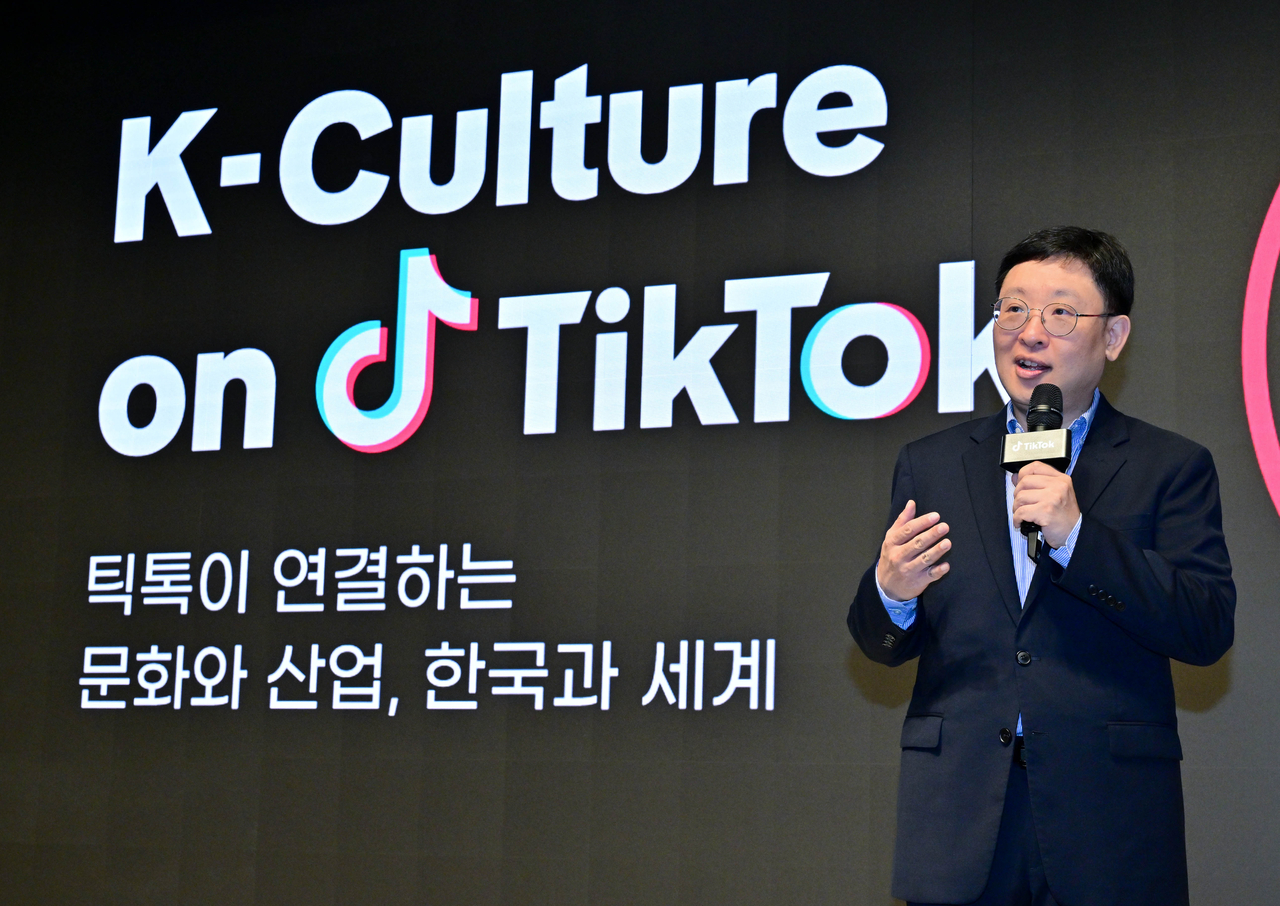
Table of contents
Jump to each section:
- What the study is actually measuring
- Why “K-Culture 4.0” matters to brand strategy
- Where the money concentrates: beauty and tourism
- The constraint the projection does not price in
- What this means for marketers
What the study is actually measuring
A useful way to read the numbers is to separate “K-culture economic impact” from “platform-attributable impact.” The study is explicitly estimating consumer spending attributable to TikTok’s contribution to K-culture, not total global spending on K-culture-driven categories.
That distinction matters because it reflects a broader platform goal: to prove that short-form formats do not just generate cultural influence, they generate measurable purchase outcomes.
Two implications follow from that framing.
First, platforms want to be evaluated less like media channels and more like retail discovery infrastructure. Second, the currency of influence is shifting from follower-scale to conversion-scale, even when the conversion happens outside the app.
A memorable way to put it: when a platform can quantify “influence-to-purchase,” it can negotiate like commerce, not like media.
 ContentGrip
Why “K-Culture 4.0” matters to brand strategy
Kearney describes the current stage as “K-Culture 4.0,” where short-form platforms and user-generated content expand K-culture’s influence beyond entertainment and into purchases of related products and experiences.
This is a strategic playbook marketers should pay attention to, even outside K-culture.
The common assumption is that cultural moments are hard to operationalize because they are unpredictable. The contrasting reality is that short-form distribution plus UGC can make culture repeatable enough to model, track, and attach to category growth.
In other words: culture is being treated like a scalable performance input.
For marketers, that changes what “brand partnerships” even mean. The partnership is no longer just a celebrity, a label, or a studio. The partnership is the content loop: creators, formats, and community remix that keep a theme alive long enough to drive consideration across adjacent categories.
Where the money concentrates: beauty and tourism
The projection highlights two category dynamics worth separating.
K-beauty is projected to generate the largest direct economic impact among the six sectors in 2030, at 3.27 trillion won (US$2.4 billion). That suggests beauty is the most “transaction-ready” category in this ecosystem, where a short piece of content can plausibly translate into a product trial or purchase.
K-tourism is expected to grow the fastest, rising 44% from 2026, and is projected to support the largest number of jobs at 30,384.
The more interesting question is why these two categories behave differently. Beauty is often a faster conversion with smaller ticket sizes and easier shipping. Tourism is slower, higher-ticket, and operationally constrained, but it can capture more value per converted customer and show up in employment and production multipliers.
The report also estimates TikTok-attributable K-culture spending could induce 26.72 trillion won (US$19.4 billion) in domestic production and support 118,865 jobs in Korea by 2030. Those “induced effects” are the platform-to-economy argument taken to its endpoint.

The constraint the projection does not price in
One explicit caveat: the analysis did not factor in potential regulatory changes tied to minors’ access to social media. TikTok and Kearney also noted they excluded TikTok’s planned positive initiatives to minimize discretionary interpretation, focusing on survey results and past trends.
That creates an important planning lesson for marketers and brand leaders using short-form as a growth lever: the upside case is being quantified, but the constraint case is often external.
A concise observation: platform-led demand is powerful, but platform-led demand is also governed.
So if your category strategy becomes dependent on a short-form discovery loop, your risk model has to include policy volatility, age-gating changes, and shifting norms around youth attention, even when your product is not “for minors.”
What this means for marketers
This projection is less about forecasting one cultural wave and more about how modern demand is constructed: community-led, format-driven, and increasingly measurable.
- Treat short-form as a category bridge, not a channelThe study spans six sectors, signaling that the value is not confined to entertainment. Marketers should look for “adjacency pathways” where interest in one content theme becomes shopping behavior in another category.
- Design for the moment after discoveryIf 55.7% say they spent after consuming K-culture content on TikTok, the strategic question becomes: what reduces friction between interest and purchase, especially when conversion may happen off-platform?
- Separate “creator influence” from “format influence”UGC and short-form structure are doing work here. Marketers often over-attribute results to individual creators, when the repeatable advantage can be the format, narrative template, and community remix loop.
- Model regulatory sensitivity as a marketing variableThe study flags that minors-related restrictions were not priced in. For brands leaning on short-form discovery, governance changes are not abstract policy news, they can reshape reach, targeting, and content strategy.
- Use economic-impact language carefully inside organizationsQuantifying induced production and jobs can help marketing secure budget and executive attention, but it can also invite overconfidence. The disciplined move is to pair impact narratives with scenario planning.
The broader implication is that “culture marketing” is converging with “commerce marketing.” Brands that once treated cultural relevance as an upper-funnel goal now have pressure to connect it to measurable demand.
That does not mean every cultural moment should be forced into conversion metrics. It means the organizations that can translate culture into repeatable buying pathways will increasingly set the standard for how marketing performance is evaluated.
In the next phase, the competitive advantage may be less about owning the loudest message and more about owning the most transferable narrative, the one that moves cleanly from a 15-second clip into a cart, a booking, or a store visit.