
Brrandom expands AI marketing practice in Southeast Asia
Brrandom's Southeast Asia expansion shows how AI marketing vendors are bundling media, creative, analytics, and agentic execution.


Brrandom is expanding its AI marketing footprint across Southeast Asia, with Singapore set to act as a regional AI Centre of Excellence and Indonesia identified as a key growth market.
The move gives the company a broader regional base for services that span AI ad tech, retail marketing, creative production, analytics, marketing mix modelling, and agentic campaign systems. In practical terms, Brrandom is positioning AI less as a single tool and more as a connected marketing operating layer.
That distinction matters. For brand teams, the meaningful signal is not just another AI vendor entering more markets. It is the growing expectation that AI should connect media, creative, data, and execution rather than sit inside one isolated workflow.
Table of contents
Jump to each section:
- Why this expansion is bigger than a geography update
- The AI marketing stack is being bundled
- The strategic tension: integration versus accountability
- What marketers should know about AI marketing vendors
Why this expansion is bigger than a geography update
Regional expansion stories can be easy to flatten into footprint updates. New offices, new markets, new leadership, and a familiar promise to support local clients. Brrandom's move is more useful when read as a signal about how AI marketing services are being packaged.
Singapore is being framed as an AI Centre of Excellence, with senior client leadership, AI research capability, and strategic partnerships sitting closer to ASEAN demand. Indonesia is being treated as a growth market shaped by its internet population and ecommerce momentum. Together, the structure points to a vendor model built around proximity to both regional decision makers and high-volume digital commerce.
The sharper observation is this: AI marketing providers are starting to sell orchestration, not just capability.
Brrandom's listed practice areas cover programmatic advertising, paid social, search, shopper intelligence, omnichannel retail analytics, generative creative production, predictive consumer insights, marketing attribution, and autonomous agents for campaign planning and optimisation. Those are not small add-ons to an agency services menu. They describe an attempt to stitch together the messy middle of marketing operations.
For marketers, this raises a more practical question than whether AI can make campaigns faster. The question is whether AI can reduce the friction between insight, asset production, channel activation, and measurement without creating a new layer of dependency.
 Enricko Lukman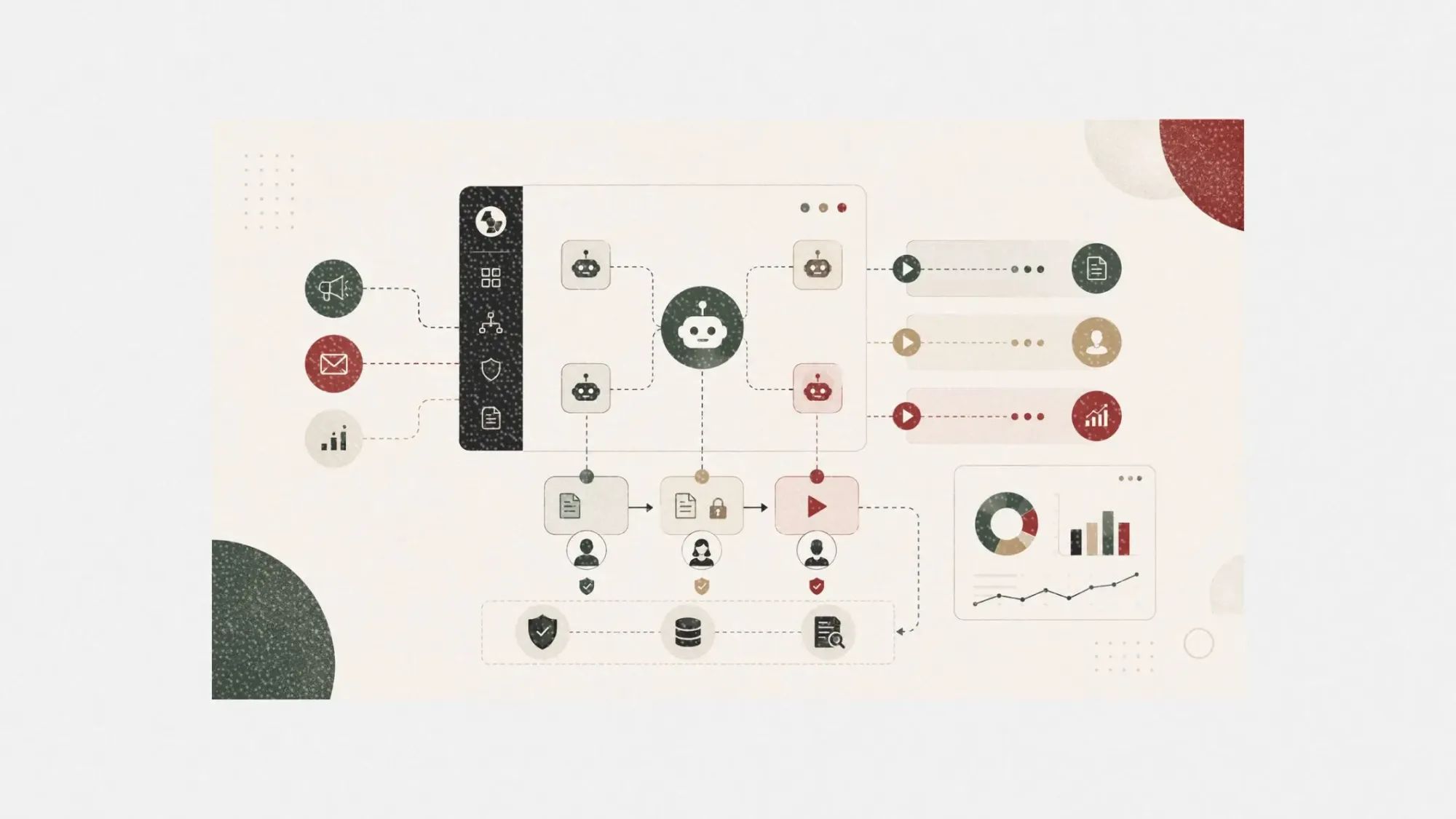
The AI marketing stack is being bundled
The most notable part of the announcement is the breadth of the services Brrandom is grouping under AI. Media buying, retail intelligence, creative production, analytics, attribution, and agentic systems are often handled by different teams, different vendors, and different dashboards.
Brrandom is presenting them as parts of one ecosystem. That reflects a wider shift in AI marketing: the value is moving from point solutions toward connected decision systems.
A standalone creative tool can help a team produce more variations. A standalone analytics tool can surface patterns faster. A standalone media tool can optimise within a platform. But the larger commercial promise of AI comes when those functions inform one another, when insights change creative, creative changes media deployment, and performance data feeds back into the next decision.
This is where agency and martech models start to blur. Brrandom's partnerships with technology providers in large language models, autonomous agent frameworks, and enterprise AI infrastructure suggest a service model that depends as much on technical integration as on campaign thinking.
The agency of the future may look less like a production partner and more like a systems integrator with creative judgment.
That does not make creativity less important. It changes where creative value sits. The value moves from producing isolated assets to designing feedback loops that help campaigns learn without losing the brand's point of view.
The strategic tension: integration versus accountability
The common assumption is that integration naturally improves marketing performance. Fewer handoffs, fewer disconnected dashboards, faster movement from data to execution. That is the appeal of bundling AI across media, creative, analytics, and automation.
The reality is more complicated. The more a vendor connects the marketing workflow, the more influence it has over campaign logic, data interpretation, and optimisation choices. Integration creates speed, but it also concentrates decision-making power.
That tension matters because agentic systems are not just recommendation engines. If autonomous agents are planning, executing, and optimising campaigns, marketers need clarity on who sets the rules, who approves the boundaries, and who owns the outcome when the system acts at scale.
Brrandom's positioning around human expertise alongside AI is important in that context. The question for clients will be what that balance looks like operationally. Does human oversight sit at strategy level only, or does it remain close enough to creative, media, and performance decisions to catch errors before they travel across the whole system?
AI makes workflows faster. Governance decides whether that speed becomes leverage or risk.
What marketers should know about AI marketing vendors
Brrandom's regional push is a useful reminder that the vendor conversation around AI marketing is maturing. The question is no longer whether a partner uses AI. Most will. The better question is how that AI changes the way decisions are made.
Ask where the system connects. A vendor that offers AI across media, creative, analytics, and automation should be able to explain how those functions interact. If each capability runs separately, the offer may be a collection of tools rather than an operating model.
Clarify the human role. Human expertise sounds reassuring, but marketers should ask where people intervene. The important detail is whether oversight happens before high-impact decisions, after the fact, or only when performance drops.
Define ownership before automation. Agentic campaign systems need rules for approvals, overrides, budget limits, brand voice, and data quality. Without those rules, automation can magnify confusion as easily as it magnifies efficiency.
Treat regional context as part of the product. Singapore and Indonesia are not interchangeable markets. AI marketing systems that work across ASEAN will need to adapt to different media habits, ecommerce maturity, languages, and customer expectations.
The bigger shift is not that more marketing work will be touched by AI. That is already happening. The more meaningful shift is that AI vendors are trying to move closer to the center of marketing operations, where decisions about audiences, creative, channels, and measurement converge.
For brand teams, that creates opportunity, but also a responsibility to ask harder questions. A useful AI partner should not only promise faster execution. It should help the marketing organization become clearer about how decisions are made, how risk is controlled, and how learning travels across the system.
In that sense, Brrandom's expansion is a small regional story with a broader lesson. AI marketing is becoming less about tool adoption and more about operational design. The teams that benefit most will be the ones that understand the difference.