Employee advocacy vs influencer marketing: why B2B brands need both
Stop choosing between employee advocacy and influencer marketing

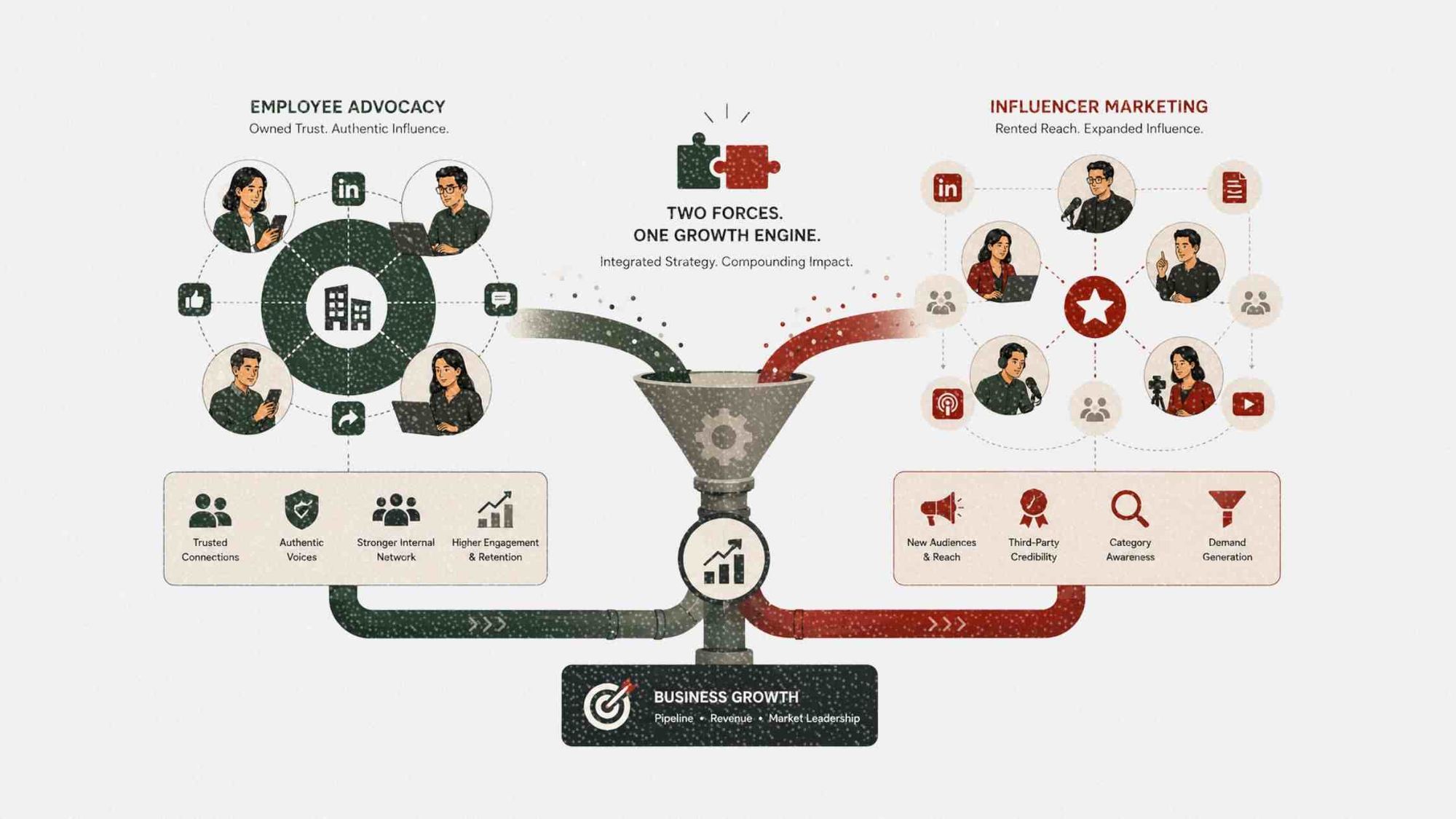
Most B2B marketing teams treat employee advocacy and influencer marketing as two line items competing for the same budget, or worse, as two names for the same thing. They are neither. One runs on credibility the brand already owns. The other runs on reach the brand has to rent. Brands that pick one over the other are leaving half the funnel uncovered, and the ones getting this right in 2026 are running both at once, on purpose, with a different job assigned to each.
Table of contents
Jump to each section:
- What is the difference between employee advocacy and influencer marketing
- Where employee advocacy wins for B2B brands
- Where influencer marketing wins for B2B brands
- How Dell and Celonis run both programs at once
- What marketers should know before combining the two
What is the difference between employee advocacy and influencer marketing
Employee advocacy is an internal program. The brand equips its own people, usually under their own name and on their own LinkedIn profile, to share company news, product updates, and original commentary with their personal network. Nobody outside the company is paid for the post. The value the employee gets back is reputation, not a fee. That single fact changes everything about how the channel scales: it is not a media buy, it is a culture investment, and it compounds the longer it runs.
This distinction sits next to a related one, since brands often confuse employee voices with the broader question of what B2B influencer marketing actually is in the first place. Influencer marketing is the opposite mechanism.
 Ariana Sorensen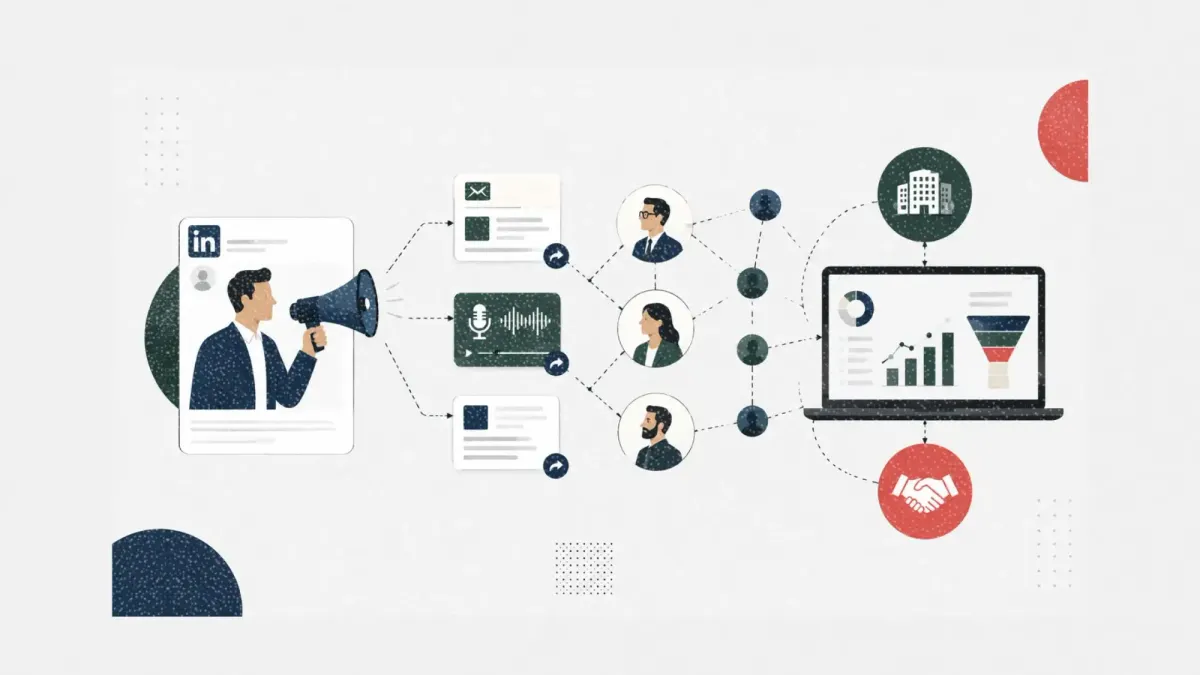
It is a paid or earned partnership with someone outside the company, an operator-creator, an analyst, an independent practitioner, whose audience the brand does not already have access to. The value being purchased is that creator's existing relationship with their followers. The content usually lives on the creator's channel first, and whatever trust transfer happens flows from the creator's own credibility, not the brand's.
Put plainly: employee advocacy multiplies trust the brand already has inside a network it does not control. Influencer marketing buys entry into a network the brand has never had access to. Both are forms of borrowed amplification, but they borrow from different places, and B2B buyers respond to each one differently depending on where they are in the decision.
Where employee advocacy wins for B2B brands
Adoption has moved well past the experimental phase. According to Oktopost's 2025 survey of more than 770 full-time B2B marketing executives across the US and UK, 55% of organizations now run an active employee advocacy program, rising to 62% among UK respondents. That is no longer a niche tactic reserved for social-first tech brands.
The structural case is about reach density rather than reach size. Employees collectively hold roughly ten times more first-degree LinkedIn connections than their company page has followers, and those connections are not random: they are former colleagues, current customers, and peers in adjacent roles, the exact population a B2B brand is trying to reach.
This is also where the cost-efficiency case against the wider creator economy in 2026 becomes obvious. A paid creator program requires ongoing budget for every new piece of reach. Employee advocacy mostly requires training, curated content, and a bit of internal momentum, then it keeps producing distribution for as long as the employee stays active.
 Ariana Sorensen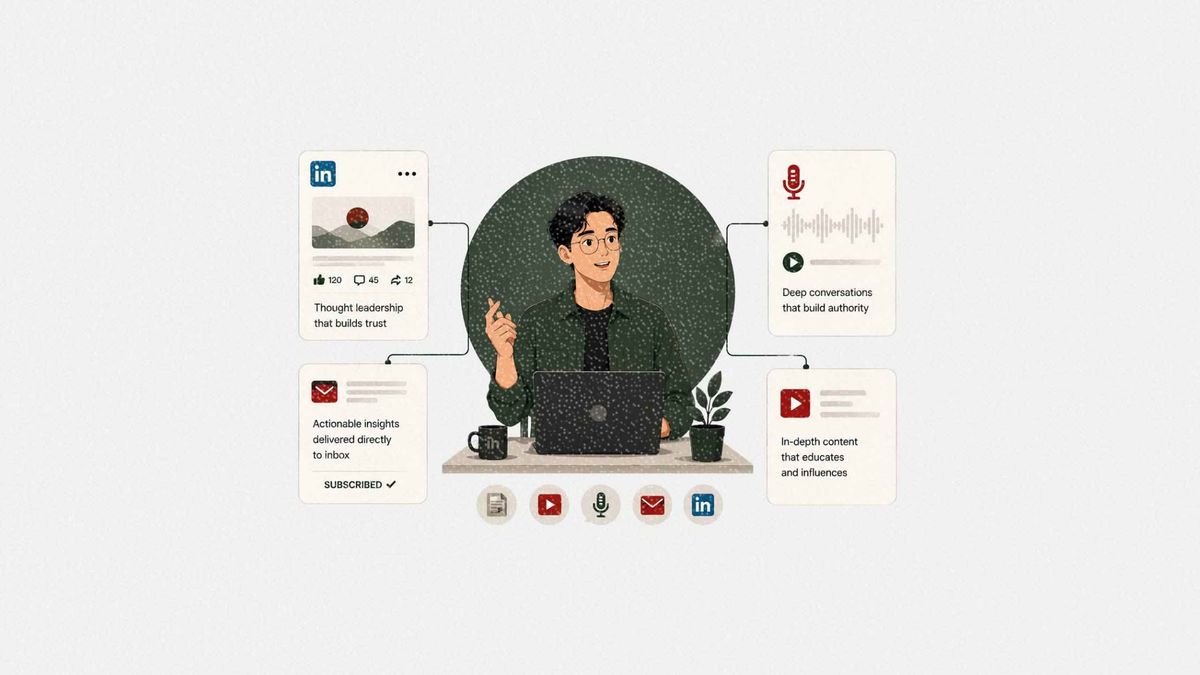
The behavioral data backs this up. LinkedIn's own Social Selling Index research finds that employees who actively share and engage on the platform create 45% more sales opportunities and are 51% more likely to hit quota than peers with lower social activity.
None of that requires a single dollar of media spend. Employee advocacy also does double duty that influencer marketing cannot replicate: every post from a credible employee is simultaneously a recruiting signal, since prospective hires read a company's LinkedIn presence as a proxy for its culture before they ever apply.
The other underrated advantage is lead quality. A prospect who reaches out after seeing a post from someone they used to work with, or whose name they recognize from a conference, arrives with a level of trust a cold outbound message never starts with. Sales teams consistently describe these as warmer, faster conversations, even when the raw lead volume from advocacy is smaller than what a paid campaign produces.
Where the channel struggles is reach outside the company's existing orbit. If a brand's employees do not already have a presence with a target buyer segment, no amount of internal training manufactures one overnight. Advocacy also takes longer to show results than a creator campaign does. A program needs months of consistent posting before the compounding effect becomes visible in pipeline data, which makes it a poor fit for a brand that needs a result inside a single quarter.
Where influencer marketing wins for B2B brands
This is precisely the gap influencer marketing fills. A brand entering a new vertical, a new region, or a buyer segment where its own employees have no organic footprint cannot wait years for internal advocates to build that audience. It can, however, partner immediately with an operator-creator who already has it.
Adoption on the B2B side has accelerated sharply on LinkedIn specifically, the platform where B2B buyers spend the most professional attention. Programs that run creator partnerships on the platform are already showing measurable lifts in both awareness and pipeline metrics.
 Ariana Sorensen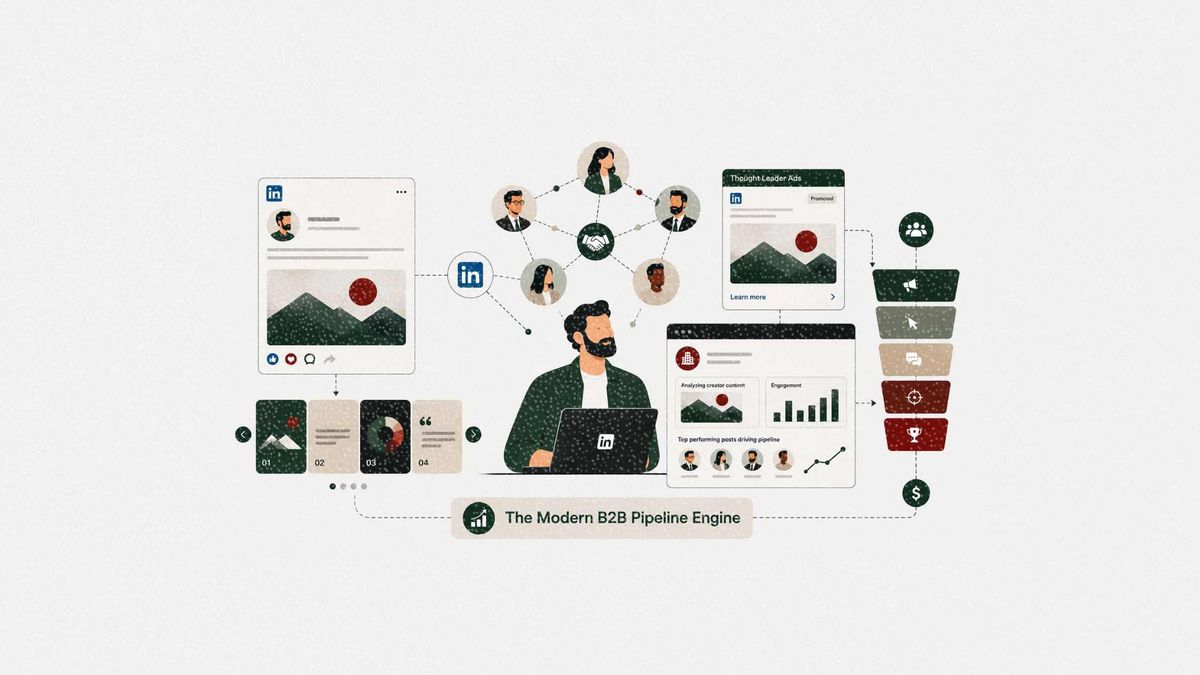
The mechanism is different from advocacy in one important way: a brand can choose exactly which audience it is buying access to, rather than working with whatever network its current employees happen to have. That makes influencer marketing the better tool for top-of-funnel category introduction in a market the brand has not yet earned organic presence in, and for moving fast when a launch window will not wait for a multi-year culture-building effort.
Cost structure is the other clear dividing line. Employee advocacy carries almost no direct media cost once a program is running, the spend goes toward training, a curation platform, and someone's time. Influencer marketing carries a real, ongoing line item: creator fees, usage rights, and contract management scale with how much reach a brand wants to buy, and that spend disappears the moment the brand stops renewing it.
The tradeoff is durability. Once the contract or campaign ends, the relationship with that creator's audience usually ends with it, unless the brand keeps reinvesting. Employee advocacy has no such expiration date.
How Dell and Celonis run both programs at once
Dell is the clearest large-scale example of running both channels deliberately rather than picking one. Internally, Dell built its employee advocacy program, branded Dell Champions, around the EveryoneSocial platform. The program now includes more than 1,200 employees across 84 countries who share a mix of company news and independently sourced industry content, with employees encouraged to keep roughly 80% of their posts as non-promotional, genuinely useful material rather than brand messaging.
Running in parallel, and managed by a completely separate team with a separate budget, Dell has worked with Goat Agency as its influencer agency of record since 2020, scaling creator activity across the US, UK, France, and Germany. One documented seven-month stretch of that partnership delivered 15 campaigns and 168 million impressions. Neither program reports into the other, and neither tries to replace it. The advocacy program builds compounding internal credibility; the creator program buys entry into audiences Dell's own employees do not reach.
Celonis offers a B2B SaaS-specific version of the same logic. The company built an employee advocacy program explicitly designed to connect everyday social activity to measurable business impact, a case that Oktopost has featured directly with Celonis's own social media lead walking through how the program moved beyond simple share counts toward pipeline-relevant outcomes.
The pattern across both companies is consistent: advocacy and influencer marketing are staffed, budgeted, and measured separately, but briefed around the same launches so the two signals reach the market in the same window.
What marketers should know before combining the two
The integration mistake most B2B teams make is sequencing the two channels instead of synchronizing them. A creator post that runs three weeks after the internal advocacy push has already faded does not reinforce anything. The brands seeing compounding returns brief both groups on the same launch in the same week, so a target buyer sees the message land twice, once from someone they already trust internally and once from a credible outside voice they do not yet know but have reason to believe.
"The mistake we see most often is brands treating these as competing budget lines," Dinda Anandita, Account Director at content-led comms agency Content Collision, says. "Employee voices and external creators are not interchangeable. One runs on credibility you already own, the other on reach you have to earn. The programs that actually move pipeline brief them together, so the post from a product lead and the review from an outside operator-creator land in the same week and reinforce each other instead of arriving months apart."
Governance also differs more than most teams expect. Employee posts generally fall under the company's internal social media policy rather than FTC influencer disclosure rules, since the employee is speaking as themselves about their own employer, not under a paid sponsorship arrangement.
The moment a brand starts compensating an employee specifically for posting beyond their normal role, that line blurs and disclosure obligations can apply. A clean program keeps that distinction explicit in writing before launch.
Measurement should stay separate too, rather than forcing both channels into one dashboard. Employee advocacy is best tracked through participation rate, Social Selling Index movement, and share-of-voice growth on owned channels. Influencer marketing is better measured through reach, engagement against benchmark, and creator-level attribution tied to pipeline. Blending the two into a single "social impact" number tends to hide which channel is actually underperforming.
For a brand starting from zero, advocacy is usually the cheaper and faster channel to stand up, since it does not require sourcing or vetting external partners, and the only real prerequisite is willing employees and a content calendar. Influencer marketing is the better first move when the brand needs to reach a specific external audience fast and has the budget to pay for that access directly.
It is also worth treating the two channels as funnel-stage tools rather than interchangeable options, a framing that runs parallel to how ContentGrip has separated UGC vs influencer marketing for B2B funnel mapping.
 Ariana Sorensen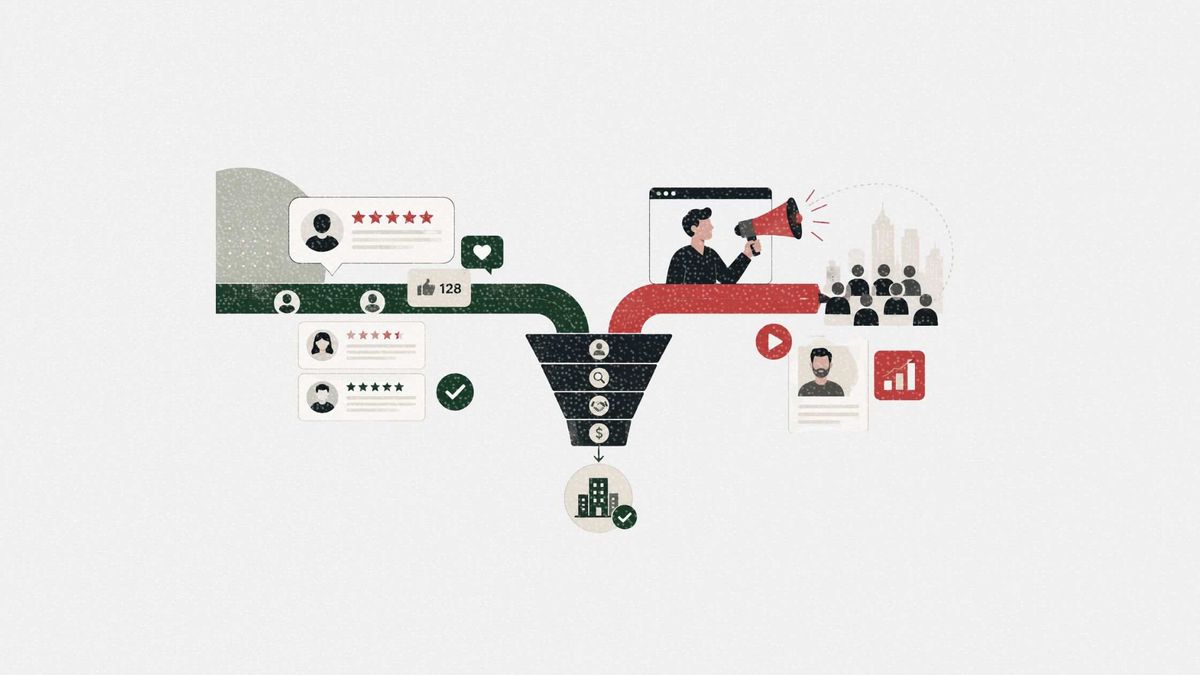
Influencer marketing tends to do its best work opening doors with buyers who have never heard of the brand. Employee advocacy tends to do its best work in the middle and later stages, when a buyer is already evaluating and looking for a credible internal voice to validate the decision they are leaning toward.
Brands do not need to choose a winner here. They need to stop running one channel as if it were a substitute for the other, and start running both with a shared calendar and separate, honest measurement for each.