Gymshark's long-term creator partnership program: the B2B lessons hiding in a B2C playbook
Inside Gymshark's Athlete program: what B2B marketers can steal from a fitness apparel brand

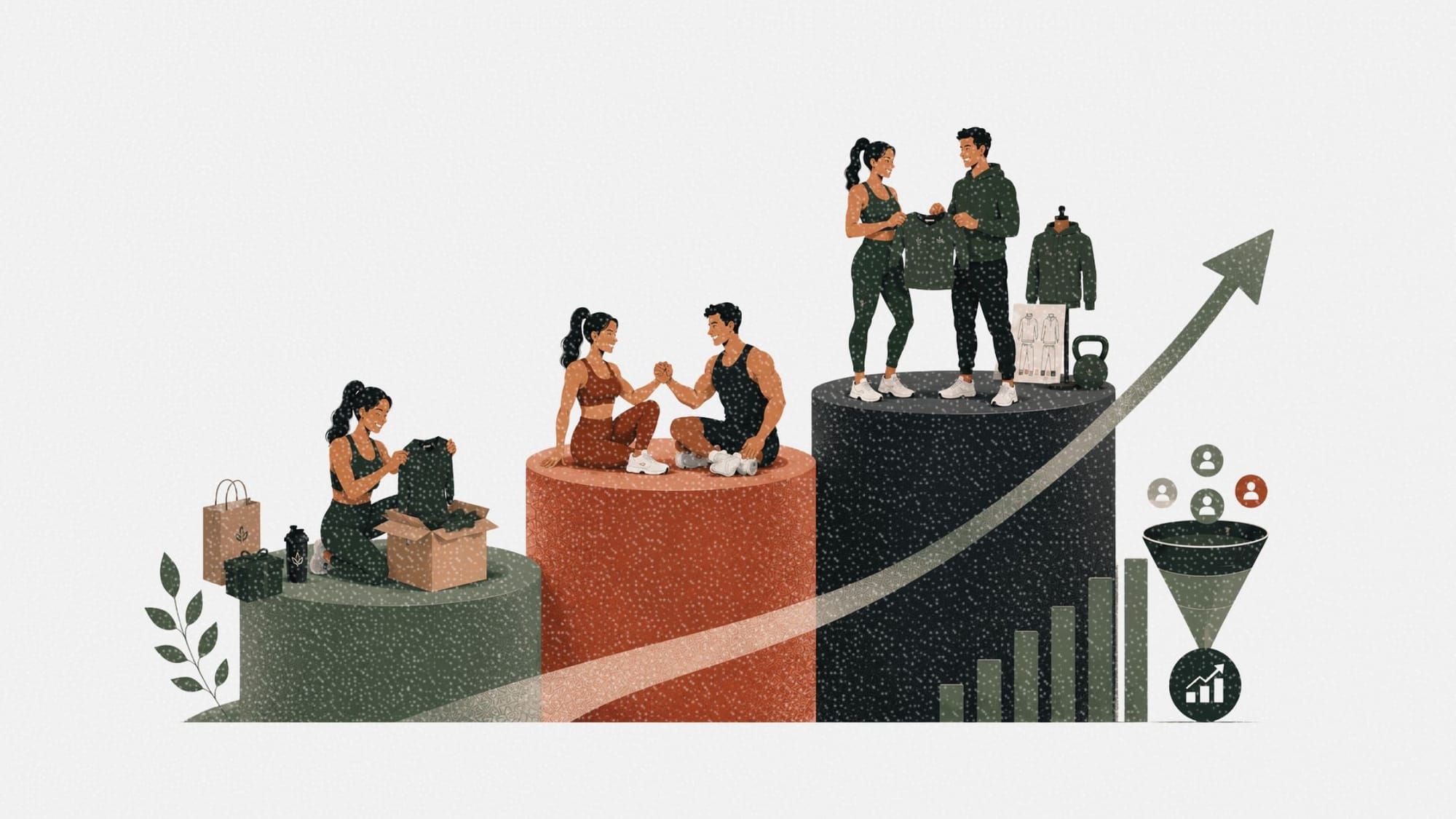
Gymshark did not invent the brand ambassador. What it built instead is a pipeline: a structured, three-tier path that turns a random creator posting a gym selfie into a long-term partner who co-designs product lines. That pipeline is why Gymshark still leans on creators more than a decade after Ben Francis started sending free hoodies to YouTubers from his parents' garage in Birmingham.
Most brands still treat influencer marketing as a series of one-off bookings. Gymshark treats it as a relationship system with defined stages, clear criteria, and a payoff that compounds over years rather than resetting after every campaign. That system holds lessons well beyond fitness apparel, including for B2B marketers who are only now starting to think about creators as long-term partners rather than paid placements.
Table of contents
Jump to each section:
- What is the Gymshark Athlete program
- Inside the seeding, ambassador, and athlete pipeline
- Why engagement beats follower count in creator selection
- The B2B lessons in this long-term partnership model
- How to build a tiered creator partnership program
- What to watch out for before copying this model
What is the Gymshark Athlete program
Gymshark Athletes are the top tier of the brand's creator ecosystem. They are not paid spokespeople in the traditional sense. They are fitness content creators, from powerlifters to bodybuilders to yoga instructors, who represent the brand on and off social media, often for years, and who get pulled into product development rather than just product promotion.
The program traces back to 2013, when Gymshark partnered with YouTuber Lex Griffin, who had around 50,000 subscribers at the time, according to Grow Your Clothing Brand's case study on Gymshark's marketing strategy. That single relationship set the template: find a creator whose audience trusts them, give them product, and let the partnership deepen naturally instead of ending after one sponsored post.
 Enricko Lukman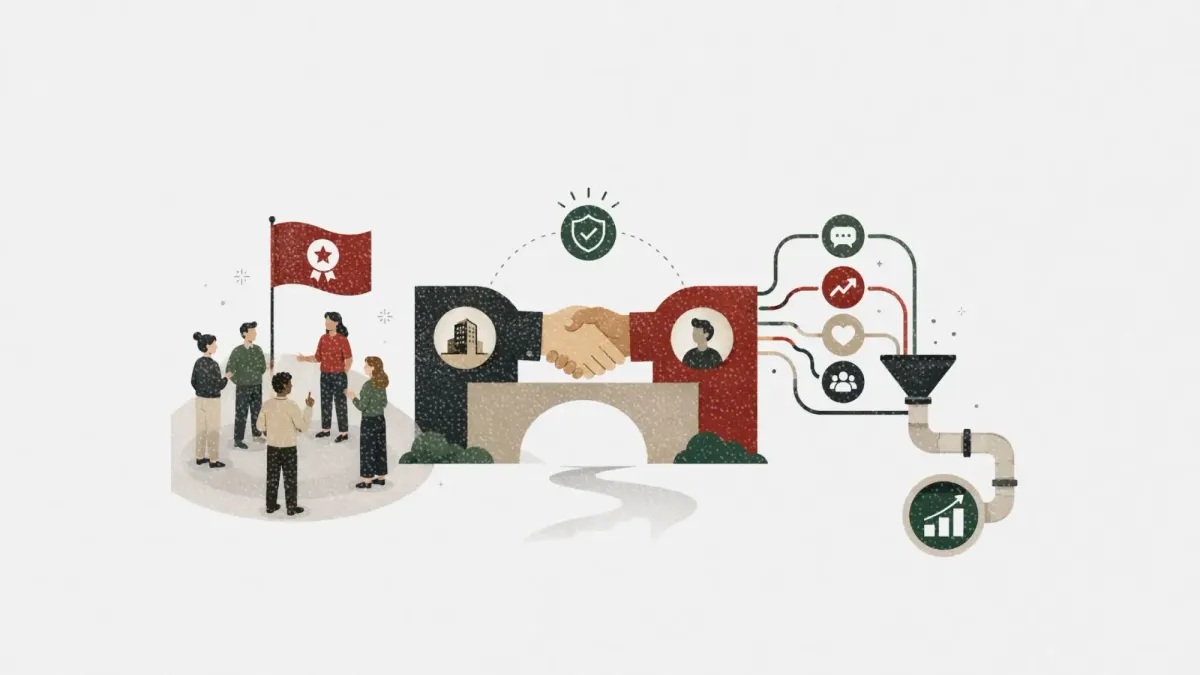
By the time Gymshark hit £607.3 million in FY2024 revenue, according to Rivo's breakdown of Gymshark's retention strategy, the athlete roster had grown from a handful of YouTubers to hundreds of creators across powerlifting, CrossFit, running, and general fitness. Gymshark does not publish an application form or a follower-count threshold for entry. Its own support documentation is explicit on this point: there is no fixed checklist for becoming a Gymshark Athlete, and no minimum audience size is required.
That absence of a rigid application process is deliberate rather than an oversight. A public application form invites volume: thousands of submissions from creators chasing free product, most of whom have no real alignment with the brand. Scouting instead means the partnerships team is actively watching who already trains in the product, tags the brand unprompted, and builds an engaged community around genuinely useful content. The filter happens before the relationship starts, not after a form has been reviewed.
Inside the seeding, ambassador, and athlete pipeline
The program works because it is structured as a pipeline with three distinct stages, not a single all-or-nothing partnership.
- Seeding. Gymshark sends free product to promising creators with no formal obligation attached. This is the lowest-commitment, lowest-cost stage, and it functions as a screening mechanism. The brand watches how creators use the product before asking for anything in return.
- Ambassador. Creators who post consistently and align with the brand move into an ongoing content relationship. They may be invited to brand events and are typically expected to post with some regularity, though the relationship is still less formal than a full sponsorship contract.
- Athlete. The top tier is contractual and long-term. Athletes are involved in campaigns, product co-creation, and sometimes named product lines. The Whitney Simmons x Gymshark collection is the clearest example: a creator's input shaped an actual product drop, and that collection sold out largely because her audience trusted her endorsement of something she helped build.
This staged structure solves a problem that flat, one-size-fits-all influencer programs run into constantly: it is expensive and risky to sign a long-term contract with a creator you have not tested. By starting with low-cost seeding and only promoting the creators who perform, Gymshark builds its most expensive, highest-commitment relationships on a foundation of evidence rather than guesswork.
Why engagement beats follower count in creator selection
Gymshark's partnerships team scouts talent directly rather than running an open application process, and the stated criteria are consistent across the brand's own support documentation: content quality, brand alignment, and how a creator engages their audience, not how large that audience is.
As Gymshark's head of PR Stephanie O'Neill has put it, in an interview cited by The Scaleup Collective, the team is more interested in how creators engage their followers than in how many followers they have. That is a meaningfully different filter from the reach-first logic that still dominates a lot of influencer marketing, where a creator's follower count is treated as a proxy for value.
The practical effect shows up in how the brand builds content. Gymshark Athletes post real training footage: form-check angles on squats, programming notes like "week four of this block," and recurring outfits across an entire training cycle rather than a single launch-day photo. That consistency does two things a one-off sponsored post cannot. It builds credibility, because the audience sees the creator actually using the product over time. And it creates recurring visibility for the brand across weeks and months, not a single day.
The B2B lessons in this long-term partnership model
Gymshark is a B2C brand selling leggings and hoodies, but the mechanics behind its creator program map onto B2B marketing more cleanly than most B2B teams assume. A handful of principles carry over almost directly:
- A tiered pipeline reduces the risk of long-term commitments. B2B marketers often skip straight to signing a creator to a retainer or an always-on partnership without a low-cost trial phase. Gymshark's seeding stage is a low-risk way to test creator fit before committing budget to a long-term relationship. The same logic applies to a B2B thought-leader program: start with a single co-created piece or a product briefing before locking in a year-long contract, and only extend the relationship once the creator has demonstrated genuine understanding of the product and its buyers.
- Long-term partners outperform one-off placements, even in enterprise categories. At EMARKETER's Creator Trends Summit, analysts pointed to Best Buy's roster of long-term creator partners as an example of enterprise brands moving away from single-campaign influencer deals toward ongoing relationships that deepen over time, layering in one-off collaborations only when a specific product launch calls for a different audience fit. Dick's Sporting Goods runs a similar model through its Varsity Team ambassador program, which recruits both external creators and employees for paid, recurring content rather than one-time sponsored posts.
- Employees can be a brand's first tier of long-term creators. Gymshark's seeding stage works because it starts with people who already have some connection to the brand's world. For B2B teams, that often means employees before external creators. There are different tiers of the same trust-building system, and Dick's Sporting Goods' decision to recruit store employees into its ambassador program alongside external creators reflects exactly that layering.
- Product co-creation deepens the relationship past a media buy. Gymshark's top-tier athletes do not just wear the product; they help design it. B2B equivalents already exist in less obvious forms: a practitioner-creator invited to shape a product roadmap conversation, or a customer advocate whose feedback becomes a documented case study. The mechanism is the same. Involving a long-term partner in the thing being sold, rather than just the promotion of it, produces content and credibility that a paid placement cannot replicate.
- The commercial terms shift once a relationship is long-term. A creator asked to post once has little reason to negotiate anything beyond a flat fee. A creator who expects to work with a brand for years has an incentive to think about retention, not just reach, which is why Gymshark's top-tier athletes behave more like ongoing collaborators with a stake in the brand's direction than vendors delivering a single deliverable.
The common thread across these points is that a one-off influencer booking and a long-term creator partnership are not the same product bought at different price points. They produce fundamentally different outcomes, and B2B marketers who budget for the first while expecting the second are usually the ones disappointed by the results.
"The B2B brands still treating every creator relationship as a one-off booking are leaving the most valuable part of the model on the table," says Dinda Anandita, Account Director at Content Collision, a content-led comms agency. "A tiered program does not just reduce cost risk. It gives you a creator who genuinely knows your product by the time they are representing it publicly, and that familiarity is what B2B buyers actually respond to."
How to build a tiered creator partnership program
Brands considering a Gymshark-style structure, in B2C or B2B, can adapt the pipeline in a few concrete steps.
- Define three tiers with escalating commitment and cost. A low-cost seeding stage (free product or trial access), a mid-commitment stage (regular content in exchange for ongoing compensation or perks), and a high-commitment stage (contractual, long-term, involving product or roadmap input).
- Set qualitative selection criteria before you start scouting. Gymshark's criteria are content quality, brand alignment, and audience engagement. Write your own version of these three filters before reaching out to a single creator, so the team scouting talent is applying a consistent standard rather than reacting to follower counts.
- Build a promotion path, not a static roster. Creators should be able to move from seeding to ambassador to top-tier partner based on demonstrated performance, not tenure. This keeps the top tier earned rather than assigned.
- Budget disproportionately for the top tier. Most of the program's cost should sit with the small group of long-term partners who justify contractual terms, not spread evenly across every creator in the pipeline.
- Involve top-tier partners in something beyond content. Product feedback, roadmap conversations, or co-created assets give the relationship a reason to outlast a single campaign cycle.
 Ariana Sorensen
What to watch out for before copying this model
A tiered pipeline is not a shortcut. It takes longer to build a genuine bench of long-term partners than it does to book ten creators for a single campaign, and the payoff shows up over quarters, not weeks. Brands also need clear internal ownership of the promotion criteria; without a documented standard for what moves a creator from one tier to the next, the process drifts into subjective favoritism, which damages trust with the exact creators the program depends on.
The other trap is treating the top tier as permanent. Gymshark's athlete relationships last for years, but they are not lifetime appointments. Brand alignment and content quality get reassessed continuously, and creators who drift from either standard move out of the top tier just as deliberately as they moved into it. A tiered program only works as a retention tool if underperformance at any stage is addressed instead of quietly ignored.
The takeaway for marketers outside of fitness apparel is not to copy Gymshark's specific tiers verbatim. It is to stop treating creator partnerships as a series of resets. A pipeline with defined stages, consistent criteria, and a real path to deeper involvement produces creators who know the brand well enough to represent it convincingly, whether that brand sells leggings or enterprise software.
Most marketing teams already have the raw material for a tiered program sitting in their existing creator relationships. The customer who keeps posting unprompted reviews, the employee who shares product updates on their own LinkedIn, the practitioner who has quoted the brand favorably in three different pieces of content over the past year: these are seeding-stage relationships that already exist, waiting for a structure that lets them deepen. The brands that build that structure now will spend the next few years compounding relationships that competitors are still restarting from zero with every new campaign.