What TikTok's algorithm update means for B2B brand safety
TikTok's brand safety rules just tightened: what B2B marketers need to know

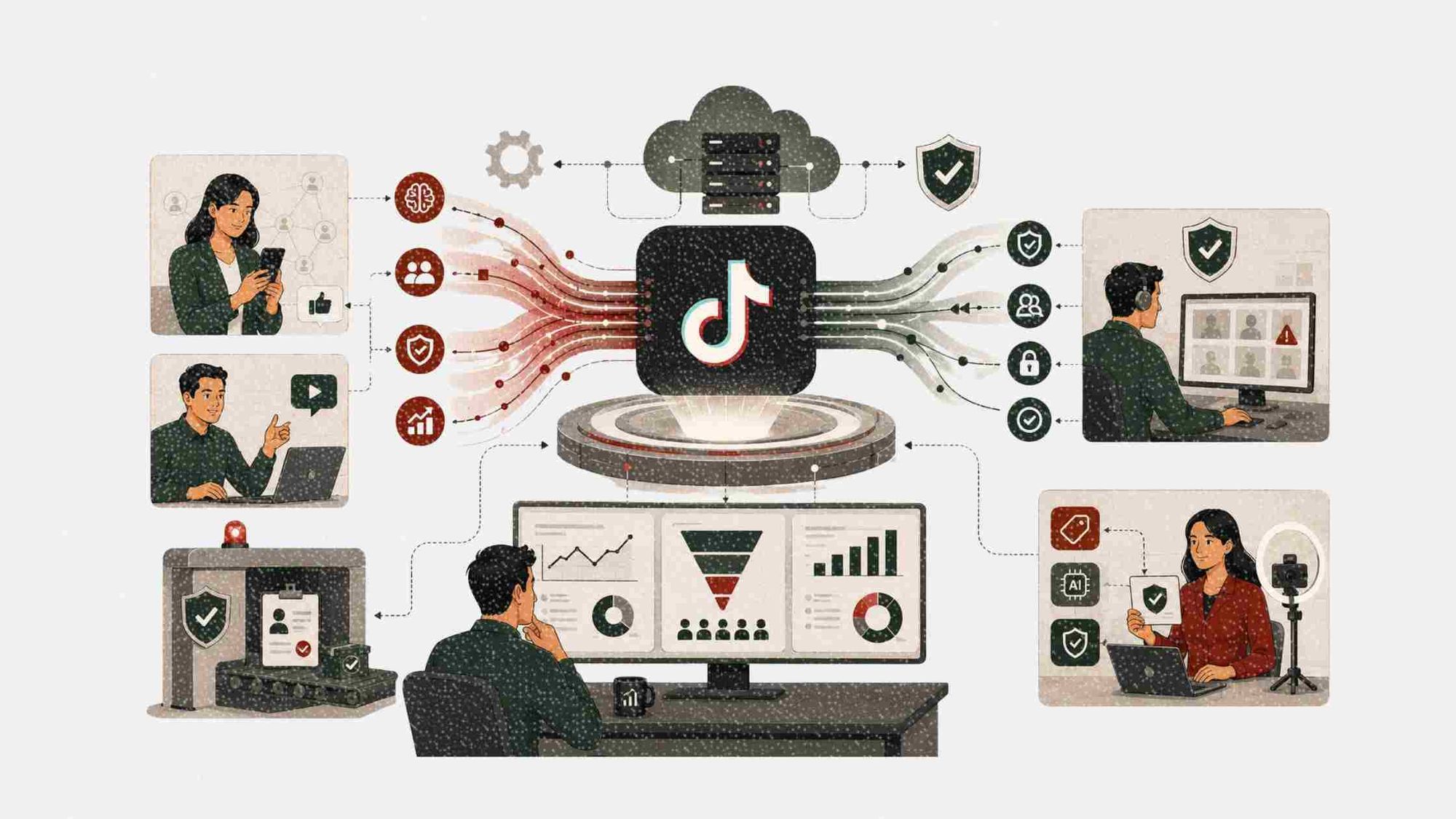
TikTok's US ownership deal closed in January 2026, bringing an Oracle-led algorithm retraining and tighter AI disclosure rules with it. For B2B brands running influencer campaigns on the platform, this is not a reason to pause, but it is a reason to update your compliance checklist and hold your performance benchmarks a little more loosely until the dust settles.
Table of contents
Jump to each section:
- The TikTok algorithm update and ownership change in 2026
- Why brand safety is tightening alongside the algorithm shift
- What B2B brands should watch
- How to prepare your TikTok program for what is next
TikTok's US ownership transition closed in January 2026, and the TikTok algorithm update that came with it is still running. Oracle is now retraining the recommendation system that decides what every B2B buyer sees on their For You page, while TikTok has separately tightened enforcement on AI content disclosure and branded content labeling. None of this changes whether B2B brands should be on TikTok. It changes what running a compliant, algorithm-aware program looks like for the rest of 2026.
 Ariana Sorensen
The TikTok algorithm update and ownership change in 2026
The deal itself is done. On January 22, 2026, TikTok formally closed the transaction creating TikTok USDS Joint Venture LLC, the US-based entity now responsible for the platform's American data, algorithm, and content moderation. Oracle, Silver Lake, and MGX each hold 15% of the new venture, ByteDance retains 19.9%, and Adam Presser, previously TikTok's head of operations and trust and safety, was named CEO, according to TikTok's own announcement.
What is not done is the algorithm work behind it. TikTok confirmed that the recommendation system serving US users is being retrained on US data inside Oracle's cloud environment, with the program audited against NIST and ISO 27001 standards.
The same safeguards extend to CapCut and Lemon8. For brand teams, the practical takeaway is that the platform's ownership question and its algorithm question are two separate timelines, and only the first one has actually closed.
Why brand safety is tightening alongside the algorithm shift
The governance change has arrived alongside, not instead of, a tighter content policy environment. TikTok's Community Guidelines on synthetic and manipulated media require creators and brands to label realistic AI-generated images, audio, or video, and the platform applies automatic labels to content it detects as AI-generated even when a creator skips the disclosure.
That requirement sits alongside, and is separate from, TikTok's existing branded content disclosure toggle, which remains the platform's authoritative signal for paid partnerships regardless of whether AI was involved in producing the content.
For brands running whitelisted or dark-posted TikTok ads through a creator's account, this distinction carries extra weight, since a campaign can need both the AI label and the commercial disclosure switched on for the same post.
 Ariana Sorensen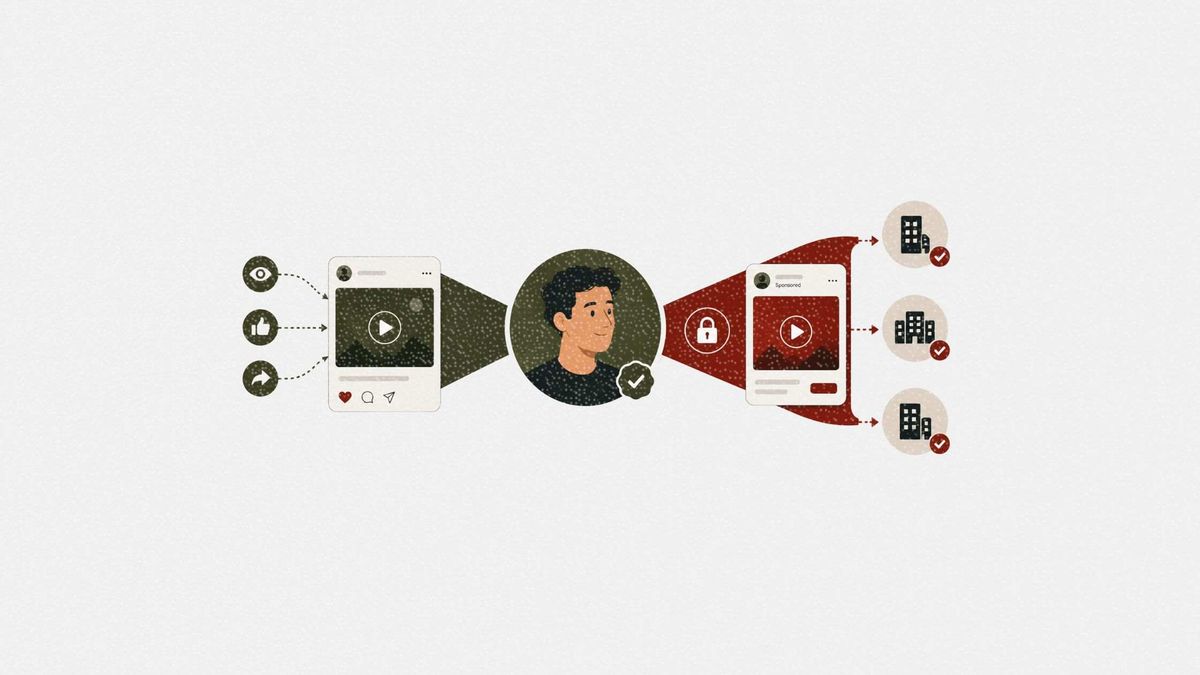
What B2B brands should watch
Brands that built TikTok performance benchmarks before January 2026 should expect some noise before drawing conclusions about what actually changed. An algorithm mid-retrain does not behave like a stable one, and a dip or spike in reach over a few weeks is not yet evidence of a structural shift in how the platform treats B2B content.
Dinda Anandita, Account Director at content-led comms agency Content Collision, puts it plainly: "A dip in reach right now does not mean TikTok stopped working for B2B. It means the algorithm is still learning a new baseline, and judging a six-month strategy off three weeks of retrained data is how brands talk themselves out of a channel that is still performing."
The more durable risk sits in compliance, not reach. Enforcement on undisclosed AI content and unlabeled branded posts has tightened, and the penalties now extend beyond the individual video to account-level reviews on linked ad accounts within the same Business Center.
How to prepare your TikTok program for what is next
A few adjustments make the current transition easier to manage without overreacting to it:
- Confirm both the AI-generated content label and the branded content disclosure toggle are part of every creator brief, since one does not substitute for the other.
- Give algorithm-driven performance comparisons a 60 to 90 day buffer before treating them as a verdict on the channel.
- Re-check Business Manager and whitelisting access agreements signed before January 2026, since some targeting permissions are being reconfigured as the platform rebuilds its ad infrastructure under the new ownership.
- Keep a second short-form platform warm as a hedge, not a replacement, while the recommendation system stabilizes.
 Ariana Sorensen
The ownership question is settled. The operating environment underneath it is not, and the brands that treat 2026 as a year of active monitoring, rather than a one-time policy update to file away, will be the ones still running clean, well-targeted TikTok campaigns once the algorithm and the disclosure rules both settle into their next normal.