11 recommended tools for media relations
Managing media contacts doesn't have to be painful. Here are some recommended tools for media relations to help PR teams scale their efforts.



Media relations requires disciplined journalist research, thoughtful outreach and follow-up.
A contact list can be big and still miss the people who cover your story. Before spending on software, check whether it helps you verify a journalist's beat, recent coverage and preferred contact method.
That’s why PR professionals need better strategies for building relationships with the media. And no, we’re not talking about cramming everything into a spreadsheet and hoping for the best.
The good news? There are media relations tools that can handle the time-consuming tasks for you.
These tools are designed to help you streamline everything from finding the right journalists and crafting targeted pitches to tracking brand mentions and measuring the success of your outreach.
Whether you’re working with a lean team or running a full-scale PR operation, using the right tools will make your job easier and more effective.
Below, we’ve rounded up some of the best media tools, ranging from free options to feature-packed platforms, so you can focus less on admin work and more on building relationships that actually drive results.
Oh, and one more thing: we’ve also included some free media monitoring tools at the end of the article. We know budgets can be tight.
Let’s dive in!
💡 Pressed for time? Here’s what matters:
Media relations tools help PR teams connect with journalists, monitor brand mentions, and manage outreach more efficiently.
- Top tools include Prezly, Semrush AI PR Toolkit, Meltwater, and Muck Rack.
- Free options to explore: Google Alerts, Talkwalker Alerts, and time-limited trials. Free journalist profiles are not the same as free PR-platform access.
- Buyer checklist covers a practical pilot.
- FAQs cover media materials, sources, and the role of media relations in public relations.
What are media relations tools?
At its core, a media relations tool is anything that helps you connect with journalists, influencers, and media outlets in a more organized and effective way. Think of it as your go-to system for keeping track of who you’re pitching to, what stories they’re covering, and whether they’re even opening your emails.
Most media relations tools come packed with features to make your life easier, like:
- Media databases to help you find journalists based on their beat, location, or outlet.
- Pitching tools that let you send personalized emails and track metrics like opens and replies.
- Monitoring tools to keep an eye on brand mentions, industry trends, and even your competitors.
The goal? To help PR teams stop wasting time on irrelevant pitches and build genuine connections with journalists who actually want to hear your story. It’s like having a smarter, faster version of your traditional PR processes in one place in one place.
So whether you’re a one-person team juggling a million tasks or part of a large PR department, the right media relations tools can help you level up your game.
Recommended tools for media relations
Compare the job before comparing subscriptions. A newsroom CMS, journalist database and monitoring platform all appear in lists of media relations tools, but solve different problems.
Key takeaways
- Choose a tool based on the weakest stage of your media workflow, not the longest feature list.
- Recheck vendor prices and trial limits against official pages before budgeting.
- Test contact accuracy and pitch relevance on a small campaign before committing to a plan.
| Job to be done | Tools to evaluate | What to test |
|---|---|---|
| Branded newsroom and contact CRM | Prezly; Presspage | Asset publishing, contact history, permissions |
| Journalist discovery and pitching | Semrush AI PR Toolkit; Muck Rack | Beat accuracy, outreach workflow, export limits |
| Coverage and competitor monitoring | Meltwater; Onclusive | Regional sources, alert quality, reporting |
| Free listening and alerts | Google Alerts; Talkwalker Alerts | Coverage gaps, duplicates, source relevance |
1. Prezly

Prezly is an all-in-one media planning tool that helps PR teams manage media outreach and create engaging press materials.
It features a contact management system that lets you organize journalist profiles, track past interactions, and store notes about each contact. This helps PR teams build and maintain stronger relationships with the media.
One of Prezly’s standout features is its Story Editor, which enables you to create visually engaging press releases. You can embed videos, images, and multimedia elements to make your stories more compelling.
Another useful feature is the platform’s archiving system. All your press releases and media kits can be stored in a centralized hub, allowing journalists to access your brand’s full story timeline. This makes it easier for them to get the information they need to cover your story.
According to Prezly's official pricing page, Essential is €100 per month billed annually for one user, one site and up to 5,000 contacts. Standard is €250 per month billed annually. Check taxes, billing terms and live usage limits before subscribing.
 Falencia Naoenz

2. Semrush AI PR Toolkit (formerly Prowly)

Teams researching Prowly should check the current Semrush AI PR Toolkit offering instead of relying on older package names. It covers journalist discovery, media pitching and email analytics, with more monitoring and reporting on higher tiers.
According to Semrush's official pricing page, Base starts at US$149 per month billed annually, Pro at US$279 and Business at US$499. Base focuses on media research and pitches. Pro adds monitoring and further analytics, while Business expands competitive tracking.
Semrush also lists a seven-day trial, but some contact exports, sends and analytics are limited. Confirm which functions can be tested before selecting a plan.
3. Anewstip
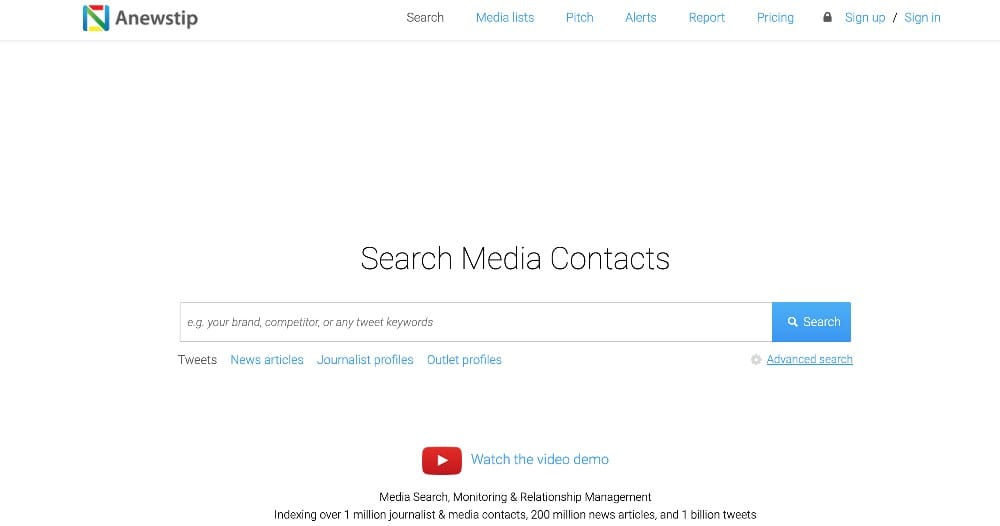
While Prowly lets you find journalist contacts based on a set of filters (topics, country, job role, etc), Anewstip takes it one step further.
With this app, PR practitioners can find journalist contacts based on what they’ve written or tweeted about in the past. Anewstip users can also subscribe to public media lists created by other users, making it a great example for those looking for media tools to simplify their outreach process.
Explore the current contact-management features in a product demo. Ask the vendor which journalist contact fields, exports and outreach functions are included in the proposed subscription, and request written pricing before budgeting.


Email-finding tools can support contact research, but addresses inferred from public profiles should be verified before outreach. A journalist's recent work, stated contact preferences and applicable privacy rules matter more than a large extracted list.
For a media relations team, a contact tool is most useful when it makes records easier to check and update. Compare how the product collects, refreshes and exports contact data, then verify permissions and privacy safeguards before using it for outreach.
4. PressPage

Presspage provides hosted newsrooms, press release publishing and media relations tools. Evaluate the product on newsroom editing, journalist contact workflows, media asset permissions and integration with your existing site.
Ask Presspage for a current quote and the specific publishing, contact and user limits attached to the plan. Older published price figures may no longer apply.
5. Agility PR

Agility PR provides media contacts, campaign tracking and monitoring tools. Confirm database coverage and the accuracy of contact details in your target countries through a sample audit before paying for access.
Agility PR offers additional services for media monitoring, newswire, and ad-hoc campaign reports. However, there’s no public pricing available, so interested practitioners need to get in touch with the team to learn more.
Ramya Priya
6. Muck Rack
Muck Rack is a platform that helps PR pros find and connect with people in the media (think: journalists, podcasters, freelancers, columnists, etc). The tool supports automated and personalized email pitches, news monitoring, team collaboration, and PR performance reports.
Muck Rack claims to provide the most recent contacts by constantly tracking signals from across the web. Using its ‘PR search engine,’ users can obtain detailed info about media contacts, such as their emails and social media handles.
PR professionals can also upload their existing lists of data about media personnel. When changes occur – such as job updates or when new work is published by that author – this list will update automatically. In short, this helps PR folks clear out inactive contacts and prevent bounced emails.
The pricing for Muck Rack is only available upon request. Packages are customized based on each client’s needs.
7. Cision Connect

Cision Connect combines media relationship management with journalist and outlet discovery. Ask the company to demonstrate current contact coverage, deduplication and integrations for your PR team rather than relying on historical database-size claims.
After selecting relevant contacts, users can send story pitches to them, either one-by-one or to several people at once. PR pros can also use Cision’s Story Kit, which is essentially a tool to easily construct a professional press release. Users are prompted to add components like PDFs, quotes, images, and videos. Content created through Story Kit can also be delivered directly to relevant media contacts.
Currently, Cision’s pricing is only available upon request and plans are tailor-made for each client.
8. Meltwater

Meltwater is another platform that furnishes clients with a media database and PR distribution. Users can access fairly comprehensive information via Meltwater, like contact details, roles, and beats.
The platform’s AI-driven search engine also curates media contacts based on the content of their recent articles. This makes it easier for PR professionals to filter out the most relevant ones.
Using Meltwater, businesses can distribute press releases regionally, nationally, or globally. The platform also comes with analytics and services to help teams measure content performance and engagement.
Meltwater’s price is available on request and interested companies can ask for a demo before committing to a plan.
9. BuzzSumo: Journalist Profiles
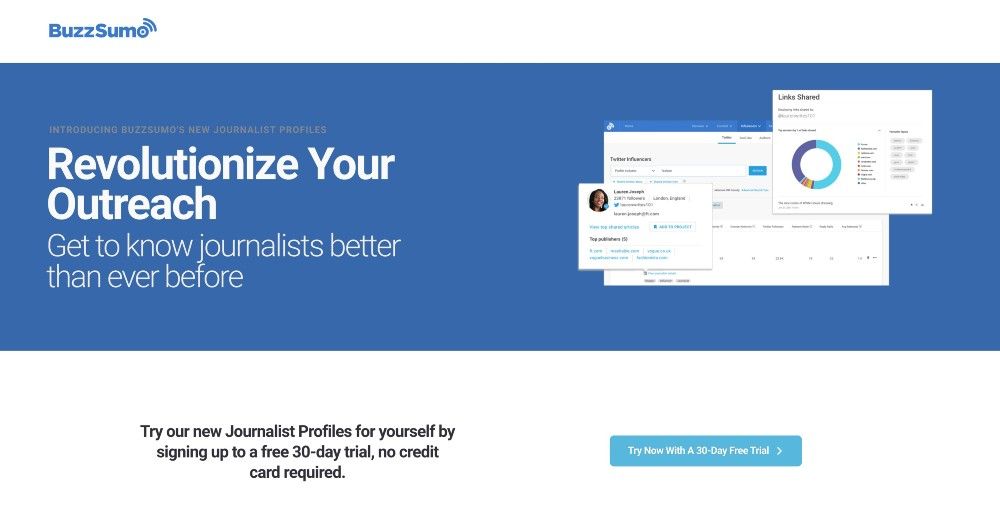
BuzzSumo is a content marketing platform that offers unique media tools examples, such as its Journalist Profiles feature, which helps PR teams build relevant media lists.
Users can gather useful intel on journalists, such as their name, location, and email, and track their article history to better understand their areas of interest.
PR pros can use this data to create relevant pitches, outreach emails, or social media content. However, it's important to note that this tool does not yet support direct press release distribution.
Availability and plan terms for BuzzSumo's journalist research features can change. Check the current product documentation and request a live demonstration before treating this as an active standalone subscription.
10. Respona
Respona is an end-to-end tool for PR outreach efforts like link-building, collaborating with influencers and bloggers, and finding journalist contacts. The tool also supports personalized pitch emails to allow brands to stand out among the countless emails in a journalist’s inbox.
Its contact listing service helps businesses connect with journalists who work on relevant beats. This increases the likelihood that a journalist will pick up the pitch and allows brands to reach a larger potential audience. Respona’s global database contains journalists at publications of all different shapes and sizes.
Check Respona's current product information for available plans and outreach limits. Request current pricing rather than basing a purchase on older published rates.
Enricko Lukman
11. Onclusive
Onclusive now includes PRgloo, offering a platform for PR teams to easily connect with journalists and media. It provides a database of media contacts that is regularly checked and updated to ensure the information is accurate and useful for users aiming to reach out to the right people.
The platform features capabilities for creating and sending media-rich emails, maintaining up-to-date media contact lists, and scheduling email distribution. It also tracks the success of press efforts by linking media coverage back to the initial outreach.
With PRgloo becoming part of Onclusive, users have access to a broader range of tools in one platform, making media relations tasks more straightforward. For pricing, Onclusive invites interested teams to contact them directly, as it offers solutions designed to meet the specific needs of each team.
How should a PR team choose media relations software?
Choose the tool that removes the biggest bottleneck in your pitching and coverage workflow, then test it in a short, measurable pilot.
- Pick one job: journalist research, contact management, newsroom publishing, monitoring or reporting.
- Sample the data: check 20 to 30 journalists in your target market for recent coverage and contact preferences.
- Test one story: create a targeted pitch, send through an approved domain and record relevant replies, not just opens.
- Check the terms: confirm seats, exports, regional coverage, monitoring limits, renewal terms and total annual cost.
- Measure what happened: track relevant coverage, accuracy, time saved and the maintenance work involved.
Software can make a weak pitch faster. The first test is still whether the reporter has a reason to care about the story.
Free media relations tools
Thankfully, some free tools for media relations can help you get started with journalist outreach, press release distribution, and media monitoring without breaking the bank.
Here’s a curated list of platforms that offer no-cost features or trials:
1. Muck Rack demo and journalist resources
Muck Rack offers demos of its paid PR software and a free portfolio experience for journalists. Its pricing and access information distinguishes complimentary journalist tools from paid PR-team access. Request a quote before budgeting.
2. Google Alerts
Google Alerts is a free and reliable way to stay informed about brand mentions, competitors, and trending topics in your industry.
To be fair, Google Alerts may not have advanced features like paid media monitoring tools, but it can help PR teams track newsworthy updates and identify which journalists or outlets are covering relevant stories. Use these insights to build a targeted list of journalists and pitch ideas that align with their focus.
3. Semrush AI PR Toolkit trial
Semrush advertises a seven-day AI PR Toolkit trial. Its official trial conditions say some sends, contact details, exports and email statistics are restricted. Confirm trial limits before calling it a full production test.
4. Talkwalker Alerts
Talkwalker Alerts provides a free web and social mention-alert service for tracking brands, topics and competitors. It is useful for a first signal feed, but does not replace a paid journalist database or comprehensive coverage verification. Compare its alerts with sources your team follows.
FAQs
What are media relations materials?
Media relations materials include press releases, media kits, fact sheets, and multimedia content (like videos and images) designed to help journalists cover your story accurately.
What are the sources of media relations?
Sources for media relations include journalist databases, media outlets, press contacts, and tools that aggregate information about journalists and their recent work. Tools like Cision and Meltwater can help you identify and connect with these sources.
What is media relations as a tool of public relations?
Media relations refers to managing communication and building relationships with journalists, bloggers, and media outlets as part of a broader public relations strategy.
Tools like Muck Rack and Agility PR simplify this process by centralizing journalist outreach and tracking campaign performance.